

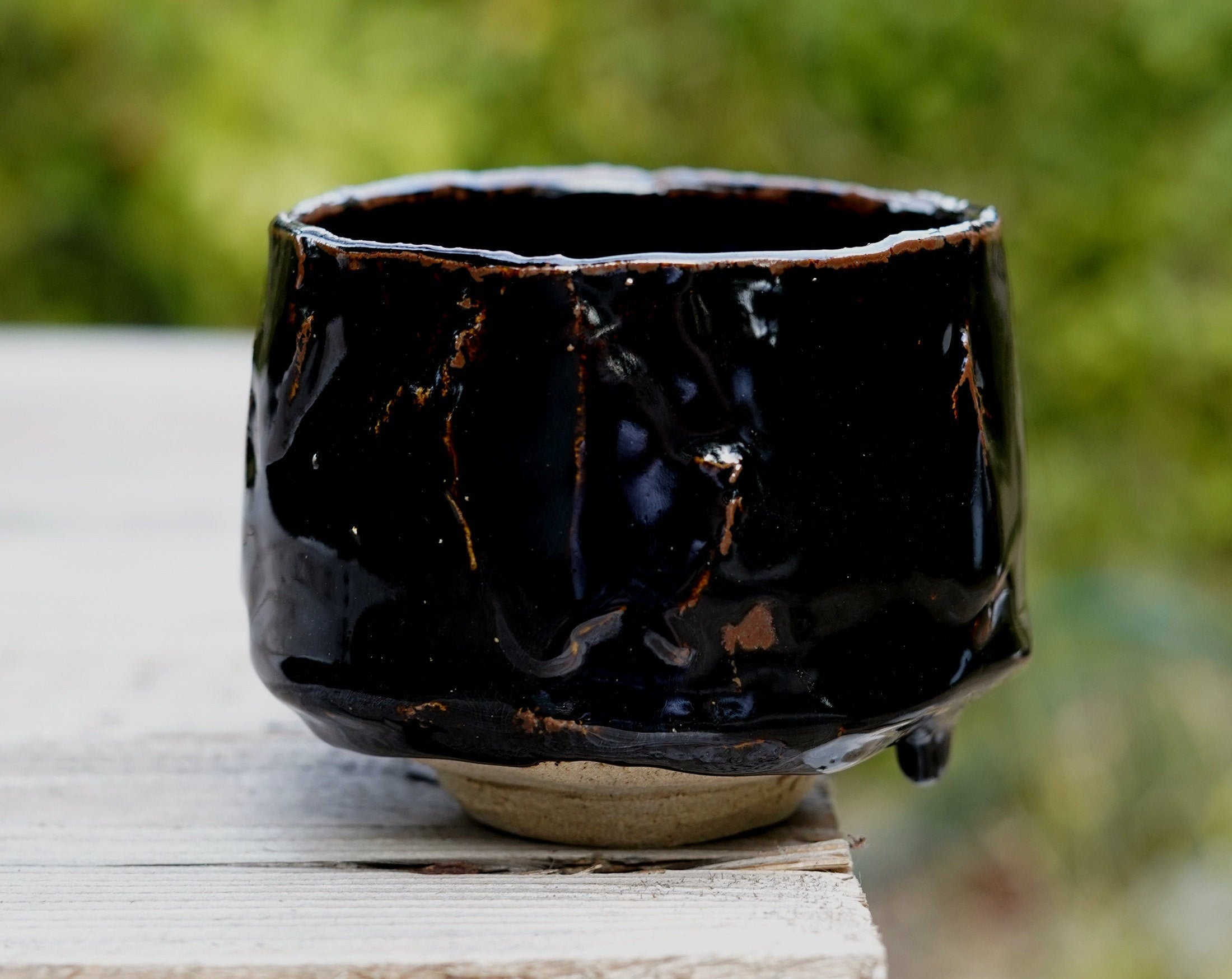
The beauty of Tenmoku pottery comes from its extraordinary glaze effects. Although many people describe Tenmoku bowls as simply “black glazed ceramics,” the tradition actually includes many different surface patterns, colors, and firing results.
The types of Tenmoku glaze developed through centuries of ceramic experimentation. Ancient Chinese potters discovered that iron-rich glazes could create dramatic effects when exposed to high temperatures. Later, Japanese tea culture preserved and expanded these styles, while modern ceramic artists continue creating new interpretations.
Each Tenmoku glaze type has its own visual characteristics. Some feature metallic spots that shine under light. Some show flowing streaks similar to animal fur. Others display colorful reflections that appear almost impossible to create naturally.
Understanding these different glaze styles helps tea lovers choose bowls that match their personal taste and appreciate the craftsmanship behind every piece.
Why Are There Different Types of Tenmoku Glaze?
Tenmoku glaze variations mainly come from differences in materials and firing conditions.
Although iron oxide is the key ingredient, many other factors influence the final appearance:
- Iron concentration
- Glaze thickness
- Clay composition
- Kiln temperature
- Oxygen level
- Cooling speed
- Firing atmosphere
During firing, minerals inside the glaze move and transform. Some create visible crystals. Others produce flowing patterns or color changes.
Ancient potters could not completely control these reactions. Instead, they learned how to influence them through experience.
This combination of preparation and unpredictability created many famous Tenmoku styles.
The most recognized types include Oil Spot, Hare’s Fur, Yohen, Tea Dust, and various modern Tenmoku interpretations.
Main Types of Tenmoku Glaze Compared
The following table summarizes the most common Tenmoku glaze styles.
Comparison of Different Tenmoku Glaze Types
| Glaze Type | Main Appearance | Formation Feature | Historical Connection | Popular With |
|---|---|---|---|---|
| Oil Spot Tenmoku | Metallic spots on a dark surface | Iron crystals separate into circular patterns | Song Dynasty Jian ware | Collectors and tea enthusiasts |
| Hare's Fur Tenmoku | Long silver or brown streaks | Iron-rich flow patterns during cooling | Classic Jian bowls | Traditional tea practitioners |
| Yohen Tenmoku | Blue, purple, gold, and rainbow reflections | Rare crystal transformation | Highly valued historical examples | Advanced collectors |
| Tea Dust Tenmoku | Fine green or brown speckles | Small mineral particles create texture | Chinese ceramic tradition | Modern tea users |
| Modern Tenmoku | Various dark and metallic effects | Contemporary glaze experiments | Global ceramic studios | Everyday users and artists |
How This Tenmoku Glaze Comparison Helps Buyers
This comparison shows that Tenmoku is not one single glaze formula. Instead, it represents a large family of iron-based ceramic surfaces.
Collectors may prefer rare patterns such as Yohen because of their scarcity. Daily tea drinkers may choose simpler styles because they provide the same cultural connection with easier maintenance.
The best choice depends on personal preference, intended use, and appreciation for ceramic craftsmanship.
Oil Spot Tenmoku The Most Recognizable Pattern
Oil Spot Tenmoku is one of the most famous types of Tenmoku glaze.
Its surface contains countless small metallic spots scattered across a dark background. Under natural light, these spots may appear silver, gold, blue, or even rainbow-colored.
The name comes from the visual similarity between the glaze spots and drops of oil floating on water.
Creating Oil Spot patterns requires careful control during firing. The potter needs the right balance of iron content, glaze thickness, and kiln atmosphere.
If conditions are incorrect, the spots may disappear or become uneven.
Historical Oil Spot bowls from the Song Dynasty are highly admired because they demonstrate exceptional control of materials and firing techniques.
Modern artists continue exploring this style because every firing can produce surprising results.
Some bowls show dense metallic patterns. Others display fewer but larger spots.
Both can have artistic value.
Hare's Fur Tenmoku The Classic Song Dynasty Style
Hare's Fur Tenmoku is another important historical glaze style.
It features thin streaks that extend downward from the rim of the bowl. These lines resemble soft rabbit fur, which explains the name.
The pattern forms when iron-rich materials move through the molten glaze during firing.
As the glaze cools, minerals separate and create elongated structures.
During the Song Dynasty, Hare's Fur bowls were highly valued because they combined practical function with elegant visual effects.
The dark background and flowing lines created a calm and natural appearance that matched traditional tea aesthetics.
Today, many tea practitioners still appreciate Hare's Fur bowls because they represent the connection between simplicity and craftsmanship.
Their patterns are often subtle rather than dramatic, making them suitable for regular tea sessions.
Yohen Tenmoku The Rare Color Changing Glaze
Among all Tenmoku styles, Yohen is considered one of the most mysterious.
The word Yohen means “unexpected change.”
This name describes the unusual color transformations that appear on the glaze surface.
A Yohen bowl may show:
- Blue reflections
- Purple tones
- Golden highlights
- Metallic areas
- Changing colors under different lighting
These effects occur because of complex mineral reactions during firing.
Historical Yohen Tenmoku bowls are extremely rare. Some are preserved as important cultural treasures.
Because successful results are difficult to achieve, many modern ceramic artists continue experimenting with Yohen-inspired techniques.
However, creating a surface that matches historical examples remains challenging.
The unpredictability is part of the appeal.

Tea Dust Tenmoku A Subtle and Elegant Style
Tea Dust Tenmoku offers a softer appearance compared with Oil Spot or Yohen.
Instead of large crystals or dramatic patterns, the surface contains many small speckles.
These tiny mineral particles create a refined texture.
The overall appearance is often greenish, brown, or gray-black.
Tea Dust glaze is popular among people who prefer understated ceramic designs.
Its beauty appears gradually when viewed closely.
Unlike highly reflective styles, Tea Dust bowls often create a calm and natural feeling.
This makes them suitable for everyday tea drinking and minimalist home environments.
Modern Tenmoku Glaze Styles
Contemporary ceramic artists have expanded the Tenmoku tradition beyond historical patterns.
Modern Tenmoku glaze may include:
- Blue Tenmoku
- Brown Tenmoku
- Metallic Tenmoku
- Crystal Tenmoku
- Experimental iron glazes
Some artists follow traditional Chinese and Japanese techniques.
Others combine Tenmoku principles with modern materials and kiln technology.
The goal is not always to recreate ancient bowls.
Many artists use Tenmoku as inspiration for new ceramic expressions.
This evolution keeps the tradition alive while allowing personal creativity.
How to Choose Between Different Tenmoku Glaze Types?
Choosing a Tenmoku bowl depends on how you plan to use it.
For daily tea drinking:
Hare's Fur and Tea Dust styles are excellent choices because they offer elegant appearances without being overly decorative.
For collecting:
Oil Spot and Yohen styles are often more attractive because of their complex patterns.
For gifts:
A bowl with unique natural variation can create a stronger emotional connection.
Consider these factors:
- Your favorite colors
- Tea type
- Bowl size
- Handmade quality
- Surface pattern
- Personal aesthetic preference
There is no universally best Tenmoku glaze.
The best choice is the one that creates enjoyment during use.
How to Care for Different Tenmoku Glaze Types
Although Tenmoku bowls are durable, proper care helps maintain their beauty.
Recommended practices include:
- Wash with warm water
- Avoid harsh cleaning products
- Avoid sudden temperature changes
- Store carefully
- Dry completely after washing
Different glaze surfaces may show different levels of texture.
Smooth glazes are usually easier to clean.
Highly textured crystal glazes may require more attention.
Careful handling allows handmade Tenmoku bowls to remain beautiful for many years.
Frequently Asked Questions
What are the most famous types of Tenmoku glaze?
The most famous Tenmoku glaze types include Oil Spot, Hare's Fur, Yohen, and Tea Dust. These styles became recognized because of their unique surface effects and historical importance. Oil Spot is known for metallic spots, Hare's Fur features flowing streaks, Yohen creates rare color changes, and Tea Dust provides a softer speckled appearance.
Which Tenmoku glaze type is the most valuable?
Value depends on many factors, including rarity, craftsmanship, historical importance, and firing quality. Yohen Tenmoku is often considered among the rarest because its color-changing effects are difficult to reproduce. However, a beautifully made Oil Spot or Hare's Fur bowl can also be highly appreciated by collectors and tea lovers.
Which Tenmoku glaze is best for everyday tea drinking?
There is no single best option because personal preference matters. Many daily tea drinkers enjoy Hare's Fur or Tea Dust styles because they offer elegant patterns while maintaining a traditional appearance. A high-quality handmade bowl with comfortable shape and food-safe materials is usually more important than the specific glaze type.
Conclusion
The different types of Tenmoku glaze show why this ceramic tradition has remained fascinating for centuries.
From the metallic beauty of Oil Spot to the mysterious colors of Yohen, each glaze style represents a unique relationship between minerals, craftsmanship, and fire.
Understanding these differences allows tea lovers to appreciate not only the appearance of a bowl but also the complex process behind its creation.
Every Tenmoku bowl carries a story written through clay, glaze, and kiln transformation.
Share:
How Is Tenmoku Glaze Made?
What Makes Oil Spot Tenmoku Glaze So Special?