


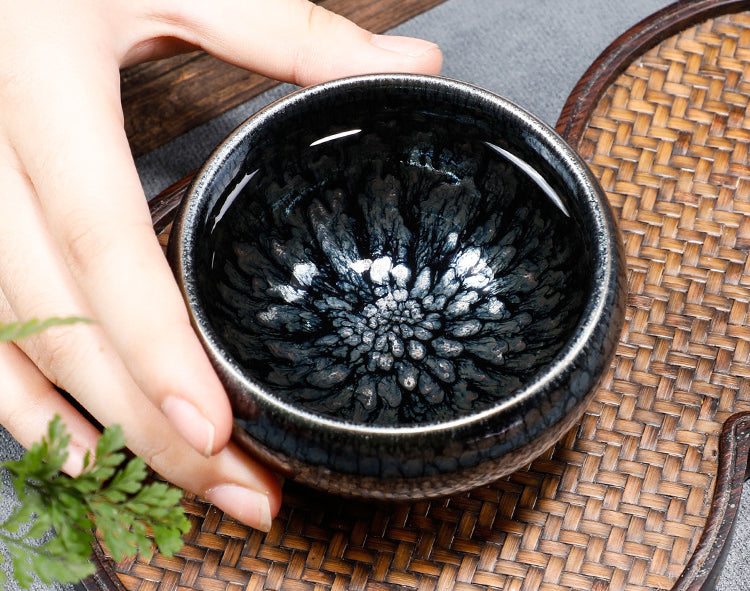
When people first see a Tenmoku bowl, the most attractive feature is usually its deep color and unusual surface patterns. Some bowls show silver spots that look like stars. Others display flowing lines similar to animal fur or waves. These effects may appear carefully painted, but the real process is much more fascinating.
The answer to how is Tenmoku glaze made begins with a combination of natural materials, traditional ceramic knowledge, and high-temperature kiln firing. Unlike printed decoration, Tenmoku patterns develop through chemical reactions inside the kiln. The potter prepares the glaze carefully, but the final appearance depends on many factors that happen during firing.
This balance between human skill and natural transformation is one reason Tenmoku glaze remains admired by tea lovers and ceramic collectors worldwide.
What Materials Are Used to Make Tenmoku Glaze?
The foundation of Tenmoku glaze is an iron-rich ceramic glaze. Traditional formulas usually contain high levels of iron oxide, which creates the dark colors and crystalline effects associated with Tenmoku pottery.
A typical Tenmoku glaze may include:
- Feldspar
- Quartz or silica
- Clay minerals
- Iron oxide
- Wood ash or other natural flux materials
Each ingredient has a specific role.
Feldspar helps the glaze melt during firing. Silica contributes to the glass-like structure. Clay provides stability. Iron oxide creates the deep black, brown, blue, or metallic effects that define Tenmoku surfaces.
The exact recipe varies between ceramic artists. Historical Chinese potters developed their formulas through generations of experimentation. Modern potters continue adjusting mineral combinations to create different surface effects.
A small change in iron content or glaze thickness can completely change the final appearance.
How Does Iron Create the Characteristic Tenmoku Appearance?
Iron is the key element behind Tenmoku glaze.
During firing, iron oxide dissolves into the molten glaze. As the temperature changes, iron particles move and separate. When the glaze cools, these particles can form crystals or flowing patterns.
This process creates famous Tenmoku styles such as:
Oil Spot Tenmoku
Oil Spot patterns appear as small metallic circles across a dark surface. These spots form when iron-rich minerals separate during cooling.
The result can resemble tiny drops of oil floating on water. Depending on lighting conditions, the spots may appear silver, gold, blue, or rainbow-colored.
Hare's Fur Tenmoku
Hare's Fur glaze develops long streaks that flow downward from the rim.
These lines form because iron crystals move through the liquid glaze during firing. The pattern resembles soft rabbit fur, which explains the traditional name.
Yohen Tenmoku
Yohen represents one of the most dramatic Tenmoku effects.
The glaze may display blue, purple, gold, and silver reflections. These colors appear because of complex mineral reactions and specific kiln conditions.
Because the process is difficult to control, Yohen-style bowls are highly appreciated by collectors.
What Is the Role of the Kiln in Tenmoku Glaze Production?
The kiln is one of the most important parts of Tenmoku glaze production.
The same glaze formula can create completely different results under different firing conditions.
Important kiln factors include:
- Temperature
- Oxygen level
- Heating speed
- Cooling speed
- Bowl position inside the kiln
- Firing duration
Traditional Chinese potters often used wood-fired kilns. These kilns created natural variations because flames, ash, and temperature changed throughout the firing process.
Modern ceramic artists may use gas or electric kilns for greater control. However, many still appreciate the unpredictable qualities created by traditional firing methods.
The kiln is not simply a heating tool. It acts as an active participant in creating the final artwork.
How Is a Tenmoku Bowl Prepared Before Glazing?
Creating a Tenmoku bowl starts long before glaze application.
First, the potter selects suitable clay. Traditional Jian Zhan used local iron-rich clay from Fujian Province. This clay helped create the dark body that matched the glaze.
The clay is then shaped into a bowl.
Common methods include:
- Wheel throwing
- Hand shaping
- Trimming
- Drying
- Bisque firing
After the bowl reaches the correct dryness, the surface is prepared for glazing.
The glaze must be applied with the right thickness. If the layer is too thin, the desired patterns may not appear. If it is too thick, the glaze may run or create unwanted defects.
Experienced potters develop a strong sense of timing and material behavior through years of practice.

Why Is Glaze Thickness Important?
Glaze thickness has a major influence on Tenmoku patterns.
A thin glaze layer may produce a smooth dark surface with limited crystal development.
A thicker glaze layer provides more material for mineral reactions. However, excessive thickness can cause problems during firing.
The glaze may flow toward the bottom of the bowl. It may also create uneven surfaces.
The ideal thickness allows minerals to move while maintaining the shape and function of the bowl.
This is one reason handmade Tenmoku bowls are difficult to reproduce. The potter must understand how clay, glaze, and firing interact together.
Why Can’t Tenmoku Glaze Be Completely Controlled?
Many people wonder why manufacturers cannot simply copy a perfect Tenmoku pattern.
The reason is that the process involves many variables.
Even when a potter uses:
- The same clay
- The same glaze formula
- The same temperature
- The same firing schedule
The result may still be different.
Natural mineral movement creates variation.
A slight change in kiln atmosphere can affect crystal formation. A small difference in cooling speed can change colors and patterns.
This unpredictability is not considered a defect. Instead, it is one of the defining qualities of handmade Tenmoku ceramics.
Each bowl records a specific moment in the firing process.
How Long Does It Take to Make a Tenmoku Bowl?
The production time depends on the maker and firing method.
A handmade Tenmoku bowl may require several stages:
- Clay preparation
- Bowl shaping
- Drying
- First firing
- Glaze application
- High-temperature firing
- Inspection and finishing
The complete process may take several weeks.
The waiting period is necessary because clay and glaze need time to transform properly.
Unlike factory-produced tableware, handmade ceramics involve careful attention at every stage.
This process explains why handmade Tenmoku bowls often have a different feeling compared with mass-produced ceramic products.
How Does Traditional Tenmoku Differ From Modern Production?
Traditional Tenmoku production relied heavily on natural materials and wood-fired kilns.
Ancient Chinese potters learned through observation and repeated experiments. They adjusted materials based on experience rather than modern laboratory analysis.
Modern ceramic artists have additional advantages.
They can study:
- Mineral chemistry
- Temperature measurement
- Kiln atmosphere control
- Glaze testing methods
However, modern technology does not eliminate the artistic challenge.
Many ceramic artists still value the traditional relationship between material, fire, and chance.
The goal is not always perfect repetition. Instead, many artists seek meaningful variation.
Why Do Handmade Tenmoku Bowls Have Different Prices?
Consumers often notice large differences in Tenmoku bowl prices.
Several factors influence the value:
- Clay quality
- Glaze complexity
- Firing difficulty
- Handmade craftsmanship
- Pattern uniqueness
- Artist experience
- Historical influence
A bowl with a rare crystal pattern may require many attempts before achieving the desired result.
Some pieces may fail during firing and never reach the market.
This production risk is part of the reason handmade Tenmoku ceramics are appreciated.
The value comes not only from appearance but also from the skill and process behind the piece.
How Should You Appreciate a Tenmoku Glaze Bowl?
Understanding the production process changes how people view Tenmoku pottery.
A Tenmoku bowl is not simply a black ceramic container.
It represents:
- Material selection
- Traditional knowledge
- Chemical transformation
- Human craftsmanship
- The unpredictability of fire
When holding a handmade bowl, small variations become meaningful. Slight differences in color or pattern show that the piece was created through a unique firing journey.
This connection between nature and craftsmanship is the reason Tenmoku continues to attract modern tea enthusiasts.
Frequently Asked Questions
How is Tenmoku glaze made?
Tenmoku glaze is made by combining iron-rich minerals with ceramic glaze materials such as feldspar, silica, clay, and natural fluxes. The glaze is applied to a ceramic body and fired at high temperatures. During firing, iron particles create crystals and patterns through chemical reactions. Temperature, atmosphere, cooling speed, and glaze thickness all influence the final appearance. Because these factors constantly interact, each handmade Tenmoku bowl can develop a unique surface.
Why does Tenmoku glaze have different patterns?
Tenmoku patterns appear because minerals inside the glaze move and transform during firing. Iron oxide creates crystal structures that may form spots, streaks, or colorful reflections. Small changes in kiln conditions can produce different results, even when the same glaze recipe is used. This natural variation makes each Tenmoku piece unique and is one of the main reasons collectors appreciate handmade ceramic bowls.
Can modern potters recreate ancient Tenmoku glaze?
Modern ceramic artists can create Tenmoku-inspired glazes using advanced kiln technology and scientific knowledge. However, perfectly copying historical examples remains difficult because traditional results depended on many natural factors. Modern makers often focus on respecting the original techniques while creating their own interpretations through different materials, firing methods, and artistic approaches.
Conclusion
The process behind how is Tenmoku glaze made reveals why this ceramic tradition has remained valuable for centuries.
From iron-rich minerals and carefully prepared clay to complex kiln reactions, every stage contributes to the final appearance. The beauty of Tenmoku does not come from decoration added afterward. It comes from the interaction between craftsmanship and natural transformation.
Every Tenmoku bowl carries evidence of its creation process. The patterns, colors, and textures represent a moment when human skill met the unpredictable power of fire.
That unique relationship is what continues to make Tenmoku glaze one of the most fascinating ceramic traditions in the world.
Share:
What Are the Main Types of Tenmoku Glaze?
What Are the Different Types of Tenmoku Glaze?