

Glazed or unglazed teaware? Start with the surface that touches your tea, then think about how often you change what you drink. A cup chosen for green tea on Monday and a scented blend on Tuesday has a different job from a clay teapot reserved for one familiar style of tea. Neither choice needs to become a rule for every piece on your table.
The useful questions are practical: Is the inside glazed? Are you brewing leaves in the vessel or only drinking from it? Can you clean and dry it as the maker recommends? Answering those questions gives you a better shopping checklist than choosing by exterior color alone. It also helps you avoid buying several specialist pieces before deciding whether you actually want a specialist routine.
Glazed vs Unglazed Teaware: The Main Difference
Glaze is a fired coating on a ceramic surface. A glazed drinking interior puts that coating between the tea and the clay body; an unglazed interior leaves the fired clay exposed. The outer finish and the inner finish do not have to match. A pot may look earthy outside but have a glazed interior, while a decorated exterior does not tell you what is inside.
The words are useful categories, not complete specifications. Clay bodies, firing, and finishes vary. Some unglazed wares are relatively dense, and some glazed finishes require particular care. Tezumi’s discussion of Japanese teapot materials makes this distinction and notes exceptions among glazes and clays. Avoid treating every unglazed vessel as equally absorbent or every glazed vessel as identical.
For shopping purposes, ask for an interior photograph and a clear care statement. Those two pieces of information are more useful than a broad promise that a material is the best for all teas. If a listing does not answer the question, ask the seller rather than trying to identify the finish from a small thumbnail.
Check the Inside, Not Just the Outside
Imagine two cups photographed from the side. One has a dark, reflective exterior; the other has a pale, matte finish. Without seeing inside, you still do not know enough about either drinking surface. A product name, color, or shine is not a substitute for the seller’s material description.
- Inner wall and floor: ask whether both are glazed, including areas below a pattern or decoration.
- Drinking rim: look for a clear close-up of the edge that meets your lips.
- Exterior: separate its appearance from the finish inside the vessel.
- Foot or base: an exposed clay foot does not by itself mean the drinking interior is unglazed.
- Care details: check the exact item, not a general statement about ceramics.
Do not scratch a surface to test whether it has glaze. If the photographs and description disagree, pause the purchase and request clarification. There is no advantage in turning an uncertain product listing into a confident assumption about how a cup will behave.
A Drinking Cup and a Brewing Pot Have Different Jobs
A teapot holds leaves while they steep. A drinking cup receives the finished infusion, unless you deliberately brew leaves directly in it. That distinction matters when reading claims about clay teaware. An account of brewing in a particular clay pot does not establish the same result for every cup made from ceramic.
Build your setup in two decisions. First, choose a brewing vessel that fits the leaves, serving method, and care routine you intend to use. Then choose a cup that feels comfortable to drink from and suits the way you serve the finished tea. The two pieces do not need identical finishes, matching colors, or the same maker.
For example, you might keep a favorite brewing pot for a regular tea while using one glazed cup for several sessions. Another household might share a brewing vessel but give each person a different cup. These are arrangements to consider, not promises that a particular combination will change flavor. Our article on choosing a teapot covers the broader purchase decision.
Match the Finish to Your Tea Routine
Use the table as a starting point for questions to ask before buying. It is not a compatibility chart for every clay, glaze, or tea. The maker’s care details remain important, especially when a piece has an unusual surface or added decoration.
| Your routine | A practical starting point | What to check |
|---|---|---|
| You switch between several teas | Consider a glazed drinking cup with clear cleaning details. | Interior finish, any remaining odor after cleaning, and drying requirements. |
| You want a pot dedicated to a favorite tea | Consider a specific unglazed pot only after checking its clay and intended use. | Seller’s recommendations and whether you want to maintain a separate brewing routine. |
| You serve different teas to guests | Keep cups easy to identify and cleaning routines simple. | Enough clean cups, comfortable rims, and somewhere to dry them. |
| You alternate plain tea and strongly scented blends | Use separate sessions and clean thoroughly between them. | Check for residual scent before pouring a delicate tea. |
| You mainly want an attractive everyday cup | Choose a finish you enjoy, alongside a practical shape. | Actual photographs, comfortable handling, and item-specific care. |
Switching Between Green, Black and Scented Teas
If you change teas often, begin with the routine you already have. Write down a normal week: perhaps plain green tea, a roasted tea, and an occasional scented blend. Then ask whether you want one drinking cup that returns to the cupboard after each use, or several pieces with separate purposes. There is no need to build a collection around a habit you do not yet have.
A simple transition is to finish the first tea, empty the cup, clean it according to its care requirements, and check that it is clean before using it again. If you notice an unwanted scent, do not assume the next tea will hide it. Recheck the cup, the brewing vessel, and any other equipment that contacted the previous drink.
When serving several teas in one sitting, separate cups can also be a matter of convenience: you can keep each drink identifiable without interrupting the session to wash up. That is a hosting choice, not evidence that every tea permanently needs its own vessel. For a focused comparison of two teas, label their positions or use a small written note beside the cups so that you do not confuse the samples.
If an unglazed pot is part of the setup, ask its seller about switching teas and cleaning that particular clay. Do not apply a rule from one pottery tradition to every other vessel. The same question should be asked about a glazed piece with a finish that the maker describes as needing special treatment.
A Glazed Cup Example: Golden Lotus Glaze Tea Cup

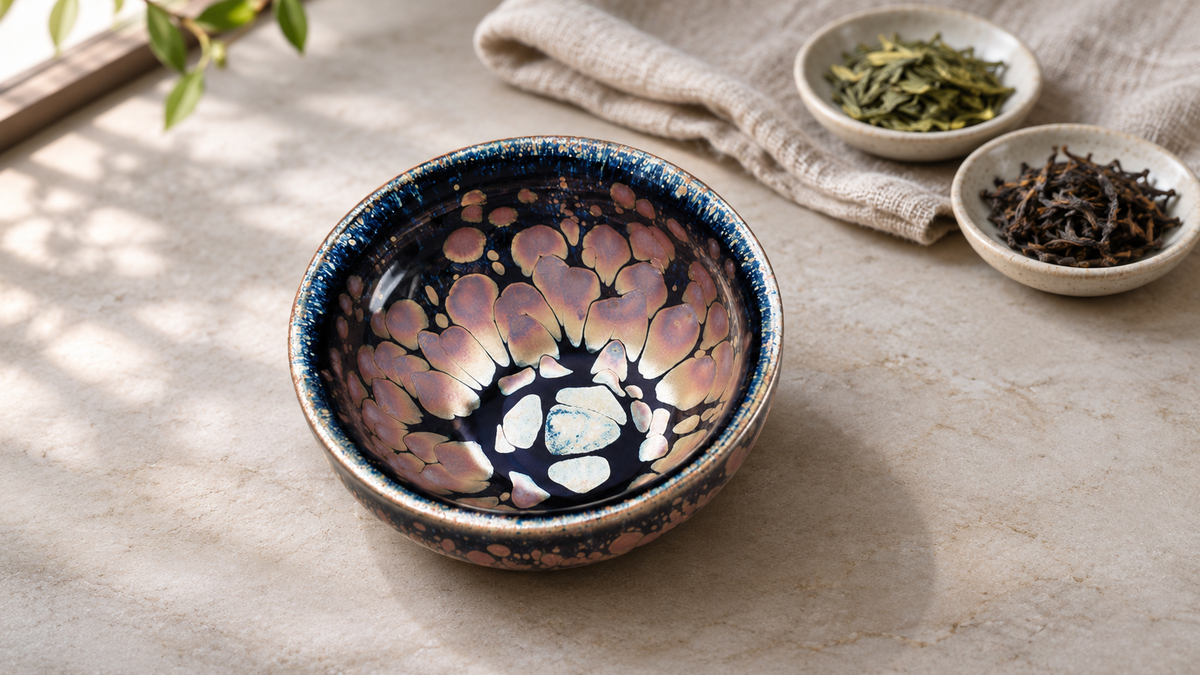
The Golden Lotus Glaze Tea Cup is a handleless option with a dark interior, peach-gold markings, and a contrasting blue-toned rim. Its product photographs make the drinking surface visible instead of showing only the outside. It offers a concrete example of what to look at when comparing a glazed cup with an unglazed alternative.
Choose it for the appearance and drinking format you want, rather than for a promised improvement to every tea. It is a drinking cup, not a substitute for a brewing pot or a water-heating vessel. If you are considering it alongside other tea cups, compare the interior photographs and ask about any detail that matters to your routine before ordering.

Cleaning Questions to Settle Before Buying
Glazed does not automatically mean dishwasher-safe or microwave-safe. Nor does unglazed mean that every piece needs exactly the same treatment. Ask for the care requirements of the item you are buying, including any restrictions related to its decoration, finish, or construction.
Think about where you wash and dry your cups. A piece may be attractive but inconvenient if its care routine does not fit your kitchen. If you normally put everything straight into a dishwasher, a cup requiring hand washing is a change of habit. Decide whether you want that change before purchasing, rather than assuming a broad material label authorizes your usual method.
- Ask which cleaning method the maker recommends for the exact piece.
- Check whether the recommendation covers both the interior and any exterior decoration.
- Set aside a suitable place for the cup to dry before storage.
- Keep care information with the order details so another household member can find it.
- If a surface develops an unfamiliar change, ask the seller before trying an abrasive treatment.
Do not treat visible dirt or leftover leaves as something that must be preserved for a tea ritual. Equally, do not improvise a harsh cleaning method because a forum comment describes a different clay pot. A simple, repeatable routine based on the actual piece is more useful than an elaborate ritual borrowed from unrelated teaware.
What to Ask the Seller
A short message can settle more than a long comparison of marketing descriptions. Be specific about how you plan to use the vessel: “I switch between plain green tea and scented blends, and I want a drinking cup rather than a brewing pot. Is the entire interior glazed, and what cleaning method do you recommend?” That gives the seller a practical question to answer.
For an unglazed pot, ask for the named clay where available, its intended brewing use, and any care restrictions. If a seller cannot verify a performance claim, leave that claim out of your buying decision. An attractive finish can be reason enough to enjoy a cup; it does not need an unsupported story about changing water or improving every infusion.
Also separate the item from the styling around it. A cup pictured with tea leaves, cloths, or serving tools is not necessarily sold with those accessories. Check the actual product contents and current options on the product page. This is especially important when comparing a single cup with a photograph of a complete tea table.
Common Questions
Does a bare clay base make a cup unglazed?
Not necessarily. Look at the drinking interior separately from the foot. Ask for confirmation if the listing does not describe both, rather than assigning the whole cup to one category from its underside alone.
Do I need a different cup for every tea?
Not as a universal rule. Base that decision on the specific piece, its care requirements, and your routine. Separate cups can make hosting or comparing teas easier without becoming a requirement for every ordinary drink.
Will unglazed teaware always make tea taste better?
No universal improvement is established by that label. A claim about one clay brewing pot is not a promise about another pot or a drinking cup. Choose for a clearly described use, and treat personal tasting preferences as preferences.
What is a sensible first purchase?
Choose one vessel with a clear interior description, photographs you can inspect, and care requirements you can maintain. For a drinking cup, include rim comfort and handling in the decision. Add specialist brewing pieces when you have a specific reason to use them, not merely because they appear in someone else’s tea setup.
The most useful distinction is not a contest between two labels. It is the match between the drinking or brewing surface, the teas you actually serve, and the way you look after your teaware.
Share:
Do Tea Cups Need Saucers? Saucers, Coasters and Handleless Cups