

A kettle heats water; a teapot holds tea leaves and hot water while the tea steeps. They do different jobs, so choosing between them starts with what you already own and how you make tea. If you brew a tea bag directly in a mug, you may not need a teapot. If you want to brew loose leaves separately and share the finished tea, a brewing pot can be a useful addition.
The important practical distinction is the heat source. A kettle is designed for its specified heating method, such as an electric base or a compatible stovetop. A brewing teapot is not automatically suitable for either. ARTTEACUP's teapots are for brewing tea with separately heated water, not for boiling water on a stove.
Teapot vs kettle: the differences that affect your purchase
Names in online listings can be inconsistent. A vessel may be called a “tea kettle” in one shop and a “tea pot” in another, especially when it has a rounded body, lid, handle, and spout. Look at the stated function and permitted heating method rather than deciding from the silhouette. A ceramic finish alone does not establish what an appliance or vessel can do.
The comparison below describes ordinary brewing teapots and water-heating kettles. A specialized product may combine functions, but that capability must be stated for the exact model. On a phone, swipe horizontally to read every column.
| Question | Brewing teapot | Water-heating kettle |
|---|---|---|
| Primary job | Steep tea and pour the brewed drink | Heat water before brewing |
| What goes inside? | Tea leaves or bags and separately heated water | Water, unless the model explicitly permits another use |
| Where is it used? | On a stable serving surface, away from direct heat | On its approved base or compatible cooking surface |
| Most useful buying details | Usable brewing volume, pouring comfort, leaf separation, cleaning access | Heating method, minimum fill, capacity, controls, care requirements |
| Can it replace the other? | Not as a water heater without explicit approval | Not as a leaf brewer without explicit approval |
Do you need both to make tea?
You need a suitable way to heat water and a suitable place to steep the tea, but these do not have to be two newly purchased objects. Your existing kettle and mug may already cover both jobs. A teapot is an addition to a routine, not an admission ticket to drinking loose-leaf tea.
Think about the last few times you made tea. Were you trying to fill several cups evenly? Were leaves left steeping while you answered messages? Did you want a second small serving without making a full mug? Those are concrete reasons to consider a separate brewing vessel. Buying a pot simply because it matches a kettle is a different, mostly visual preference.
One tea bag in a mug
Heat water in an appropriate appliance, pour it over the bag in a suitable mug, and remove the bag when brewing is finished. A separate teapot adds another object to wash without necessarily solving a problem. It becomes more useful when you want to brew several servings together or prefer pouring at the table.
Loose leaves for one person
A mug with a suitable removable infuser is a compact option. A small teapot is another option if you prefer brewing separately from your drinking cup. Choose between them according to how you want to separate the leaves from the finished tea, how much you drink in one round, and how much room you have.
Two people or occasional guests
A teapot can hold a shared infusion, which you then divide into individual cups. Match the amount you brew to the receiving cups. Two large mugs and two small tasting cups create very different requirements, even though both arrangements serve two people. Count the actual liquid you plan to pour, not just the number of seats.
Several short rounds of gongfu tea
Here, separating water heating from leaf brewing is particularly practical. The kettle supplies water for successive rounds; the small brewer holds the leaves. Pour each infusion out rather than treating the brewer as long-term storage for tea. A serving pitcher can help distribute a round, but it is an additional choice rather than a reason to buy every accessory at once.
A brewing-teapot example from ARTTEACUP
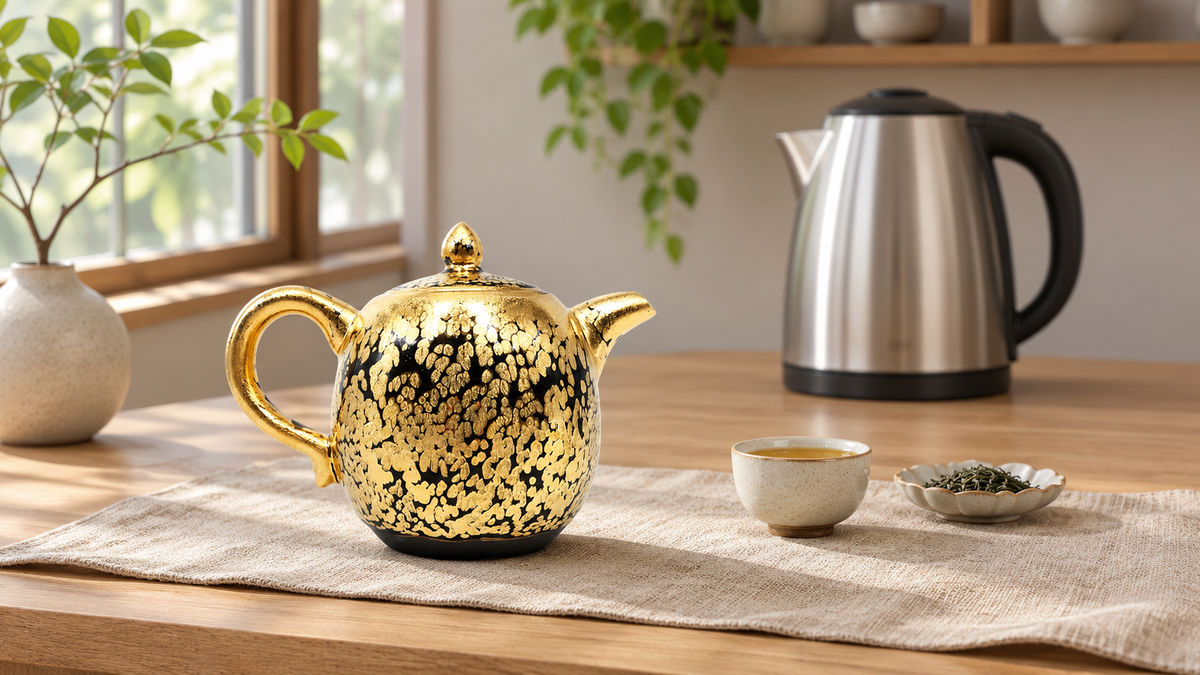
The Gold Flow Tenmoku Ceramic Teapot has a listed capacity of 350 ml. Its actual product photograph shows a rounded body, loop handle, short spout, and gold-toned pattern over a dark surface. It belongs on the brewing side of this comparison: heat the water separately, then use the pot for steeping and pouring.

Do not put this brewing pot on a stove, electric kettle base, or other direct heat source. Its ceramic description and appearance are not permission to boil water in it. The article's styled cover is an illustrative scene, not a set listing: the separate kettle, cup, and other scene accessories are not being offered as included contents.
The 350 ml figure is a listed capacity, not a promise of 350 ml of poured tea in every session. Leaves occupy space and retain liquid, and comfortable filling leaves room below the opening. A smaller actual yield is normal. Before buying, compare the pot with your intended serving amount instead of assuming that its stated volume will fill a fixed number of cups.
Match the brewer to your cups, not the kettle's maximum fill
A kettle can be larger than the teapot because it may supply more than one infusion. That does not mean you should empty the whole kettle into the pot. Heat an appropriate amount within the kettle's permitted fill range, then pour only what the brewer can comfortably hold.
For a simple planning example, two servings of 100 ml require 200 ml of finished tea. That arithmetic helps you compare a brewer with your routine, but it does not establish the exact output of any product. Allow for leaf volume, retained water, and the space needed to handle the pot without spilling.
For larger mugs, check their useful drinking amount as well. A mug's maximum capacity is not always the amount you normally pour. Our tea cup capacity chart in ml and ounces separates small repeated servings from larger drinks. Use those distinctions to plan the whole setup rather than buying the largest pot available.
From heating water to serving tea
A clear sequence keeps the two vessels' jobs separate. Set everything out before heating the water so you do not need to move hot equipment around a crowded counter. Keep cords, loose cloth, and cup handles away from the pouring path.
- Prepare the receiving vessels. Place the teapot and cups on a stable surface. Check for visible chips or cracks before use, and set damaged pieces aside.
- Measure the tea for your brewing method. Use the tea seller's suggested leaf amount and adjust on later sessions according to your preference. Do not choose a dose solely from the kettle size.
- Heat water separately. Follow the kettle's operating requirements and the temperature recommended for the tea. Different teas do not all need the same brewing temperature.
- Add water to the brewing vessel. Pour slowly and leave headroom. Keep hands clear of steam and do not lift the kettle higher than needed for a controlled pour.
- Finish the infusion. Remove a suitable infuser or decant the tea when the chosen steeping time is complete. Use an appropriate external strainer if needed.
- Serve comfortable portions. Leave room below each cup's rim. Refill when wanted rather than filling every vessel to its limit.
Do not assume a removable infuser is supplied with every teapot. Some brewing pots have filtering holes at the spout, while others need a separate strainer. Check the actual listing or ask the seller before ordering an accessory. A photograph of leaves or a pouring scene does not establish the contents of the package.
Common mistakes when the two vessels look similar
Putting a ceramic brewing pot on the stove
A familiar handle and spout do not make a vessel a stovetop kettle. Keep a brewing-only pot off direct heat. If a different product is advertised for stovetop use, verify the exact compatible surface and any limits for that model; do not extend that permission to another pot with a similar material or finish.
Putting loose leaves into an ordinary electric kettle
Keep ordinary water-heating kettles for water unless the manufacturer explicitly permits brewing inside them. A purpose-built tea-making appliance with a basket is a different product. Do not assume that every electric kettle can perform that task just because the water becomes hot.
Leaving finished tea with the leaves
As long as the leaves remain in the water, extraction continues. If the first cup tastes right but later cups are too strong, changing the kettle may not address the issue. Separate the finished drink from the leaves at the end of the infusion, or brew a smaller amount that you can pour out together.
Using a warmer to compensate for an unsuitable routine
A warming plate or candle warmer is another heat source, not automatic approval for every teapot. Check the pot's specific permitted use. If your tea repeatedly sits unfinished, a smaller brewing quantity may be more practical than adding heat beneath an unapproved vessel.
What to check before buying a brewing teapot
Once you know that you want a separate brewer, compare the details that affect daily use. A dramatic finish may attract you, but the opening, handle, capacity, and cleaning access decide whether the pot fits your routine. For a broader comparison, read choosing a teapot for your needs.
- Intended function: confirm that you are buying a brewing vessel rather than a water heater.
- Capacity: compare the listed amount with the tea you actually serve, leaving room for leaves and comfortable handling.
- Leaf separation: check what filtering arrangement is present and whether any extra strainer is needed.
- Grip and lid: inspect photographs from several angles; ask about dimensions or handling details that the listing does not show.
- Cleaning: check whether you can remove spent leaves easily and follow the care requirements for the particular piece.
- Contents and cost: verify the selected item, current price, delivery charges, and included pieces before purchase.
After brewing, empty the leaves, allow the vessel to cool appropriately, and clean it according to its care requirements. Avoid abrupt temperature changes and let it dry before enclosed storage. A kettle's descaling routine and a decorative teapot's cleaning routine should not be assumed to be interchangeable.
Quick answers about teapots and kettles
Can I make tea without a teapot?
Yes. A suitable mug with a tea bag or removable infuser can serve as the brewing vessel. A separate teapot is useful when you want to pour a shared infusion, brew away from your drinking cup, or use a small pot for repeated rounds.
Is a ceramic kettle the same as a ceramic teapot?
No. Ceramic describes a material category, not the heating function. An electric appliance with a ceramic body and a ceramic brewing pot can have completely different permitted uses. Check the exact product rather than transferring an assumption between them.
Do I need matching cups and a kettle?
No. Matching finishes are optional. Prioritize a suitable water heater, a brewer that fits your serving amount, and comfortable cups. You can keep the kettle you already own and add only the piece that solves a real need.
Will a teapot automatically make tea taste better?
A different vessel does not guarantee better flavor. Leaf quantity, water, temperature, and steeping time still matter. A teapot may make your preferred process easier to repeat, but choose it for that practical role rather than expecting its color or decoration to transform the drink.
Buy for the job that is missing
If you already heat water conveniently and enjoy tea directly in a mug, there may be nothing to add. If you want a separate vessel for loose leaves and table-side pouring, consider a brewing pot such as the 350 ml Gold Flow Tenmoku Ceramic Teapot. Keep the kettle for heating water and the teapot for brewing, then choose the number and size of cups around your ordinary tea session.
Share:
How to Pack a Ceramic Tea Cup for Travel
Colorful Tea Cups: Choosing Color, Pattern and Shape