


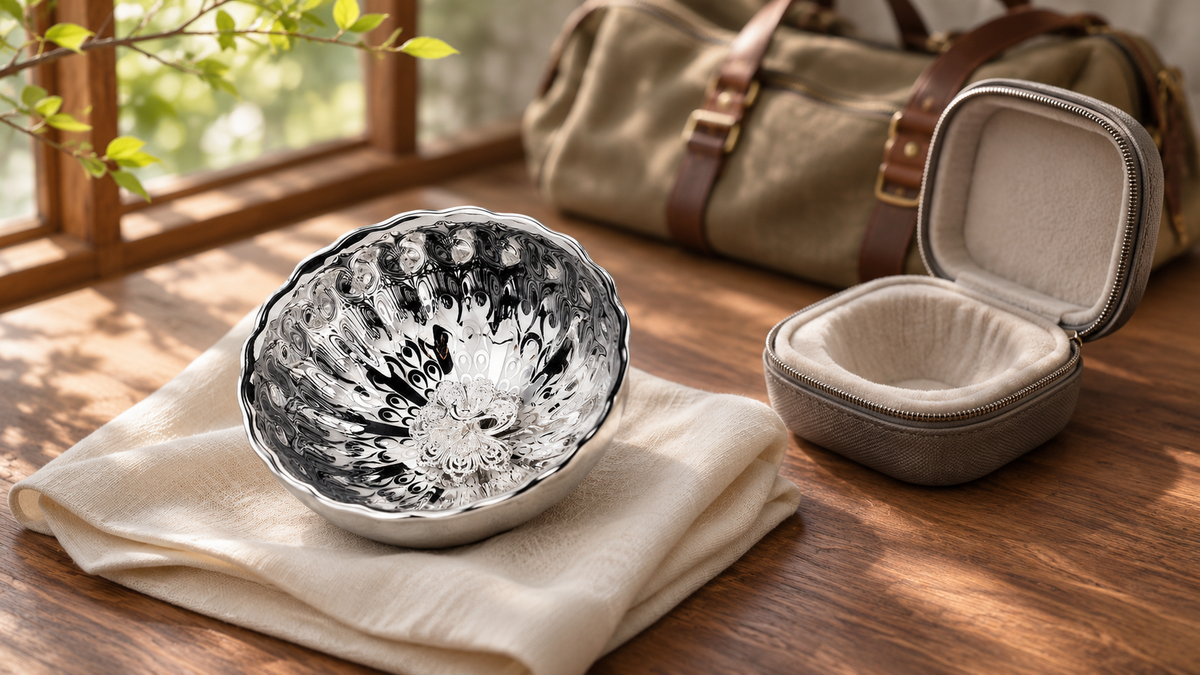
To pack a ceramic tea cup for travel, carry it empty and dry, wrap it individually, and place it inside a padded, rigid container that prevents movement without pressing on the rim. Keep that container away from heavy objects and unpack it on a stable surface. A cloth pouch can keep surfaces apart, but it is not a substitute for protection against crushing.
This approach suits a cup you will use after arriving at the office, a friend's home, or an overnight stay. It does not turn an open ceramic cup into a sealed travel mug. If you want to drink while walking or keep hot tea inside a bag, choose a purpose-made beverage container instead. Bringing a favorite serving cup is a different decision: you are transporting the vessel, then making time to use it at a table.
Decide whether the cup belongs on this trip
Start with the destination rather than the bag. Will there be a stable table, a way to prepare tea, and somewhere to wash the cup? A small ceramic cup can make sense for a planned tea break where those basics are available. It makes less sense when you will be changing transport repeatedly, carrying an overloaded backpack, or drinking without a place to set anything down.
Consider the personal cost of damage as well as the purchase price. A sentimental cup may be replaceable in practical terms but not in emotional terms. Leave especially precious pieces at home if the journey will be rough or if other people will handle the luggage. Packing reduces some risks; it cannot guarantee that ceramic will survive an impact.
For a regular office routine, keeping a cup at work may be simpler than transporting it every day. For an occasional visit, one cup may be all you need if your host supplies the brewing vessel. Ask beforehand. Avoid packing a complete tea service merely because it looks attractive together.
A different cup for a quiet tea break
The Vivid Silver Tenmoku Tea Cup offers a silver-toned, patterned appearance for table-side tea service. Its product photographs show an open, handleless form with a shaped rim. Those features make it a useful example for planning protection around the whole cup, rather than concentrating only on a projecting handle.

Choose it for the appearance you want at your destination, not because its name promises travel resistance. We do not have a verified impact rating or a confirmed protective-case fit for this cup. Measure your actual piece before buying a case. Do not assume that a presentation box, if supplied with any cup, is a reusable travel case or that accessories shown in a styled scene are included.
If you are still choosing a vessel, compare the shape you can comfortably hold with the space you can realistically protect. A cup that fits your hand but requires a case larger than your day bag may be better left at home. The useful comparison is the packed size, not just the drinking capacity.
Measure the wrapped cup, not just its capacity
Milliliters describe how much a cup holds, not the dimensions of the container needed around it. Measure its widest outside diameter and its full external height, including the foot. For a handled cup, include the handle in the width. A shaped or flared rim can be wider than the body below it, so measure the widest point rather than estimating from the base.
Next, make a trial wrap with the material you actually plan to reuse. Measure that bundle and compare it with the case's internal dimensions. External case dimensions can be misleading because the shell, lining, hinges, and zipper all occupy space. Check depth with the lid closed, not merely whether the cup fits through the opening.
The fit should hold the wrapped cup steadily without requiring force. If closing the case pushes on the rim, remove the cup and choose a different arrangement. If the bundle slides from side to side, add appropriate cushioning around the outside. Do not solve excess space by placing a hard tea tin or charger beside exposed ceramic.
Prepare a small, reusable packing kit
- A clean, dry, soft cloth or plain packing paper for the surface layer.
- Resilient cushioning around the wrapped cup, such as suitable foam or bubble wrap.
- A rigid container with enough internal room for the cup and cushioning.
- Soft separators if any additional ceramic pieces must travel nearby.
- A separate dry cloth for the return journey.
- A small bag for keeping used wrapping together after unpacking.
Check reused materials before each trip. Flattened bubbles, compressed padding, crumbs, and grit can undermine an otherwise sensible arrangement. A cloth used to wipe a table should not automatically become the clean surface layer around your cup. Keep the packing kit simple enough that you can reproduce the same arrangement when tired or in a hurry.
Do not attach adhesive tape directly to the cup. If tape is needed, apply it to the outer wrapping and leave an accessible end for removal. A tightly stretched band should not squeeze the rim or force a loose lid against it. Use only enough fastening to keep the wrapping in place.
Pack the cup in five stages
1. Empty, clean, and dry it
Pour out all remaining tea and remove loose leaves. Clean the cup according to its own care requirements, then allow the interior, exterior, and foot to dry. Packing a freshly rinsed cup in absorbent material can leave the material damp for the rest of the journey. Allow time before departure rather than treating drying as a last-minute step.
2. Cover every exposed ceramic surface
Place the cup on a clean work surface and wrap it individually. Cover the base, sides, and rim, checking that folds will not slip away when you lift the bundle. Do not stuff the bowl tightly or press wrapping into decorative details. The aim is to separate the ceramic from hard surfaces, not to create pressure inside it.
3. Cushion the bottom, sides, and top
Place cushioning beneath the wrapped cup before lowering it into the container. Fill empty space gently around the sides, then check the area above it. No part of the rim should touch the hard lid. Keep the cup upright when the case permits, but treat all sides as potential contact points because luggage can tilt during a journey.
4. Check closure and movement
Close the case slowly. Stop if the lid needs pressure to shut or the zipper pulls the lining tightly against the cup. With the case supported close to the table, tilt it gently and listen for shifting. Do not perform a drop test or vigorous shake test with your actual teaware. Reopen and adjust any loose arrangement.
5. Give the case its own protected space
Put the closed case where it will remain supported and where you can remove it without digging through heavy belongings. Keep it separate from shoes, chargers, bottles, and dense books. Avoid the bottom of a bag that is frequently dropped onto the floor. A rigid shell helps maintain separation but should not be treated as permission to pile weight on top.
Match the arrangement to the destination
The same cup can face different handling conditions across a week. Choose the smallest practical arrangement that still protects it, rather than removing cushioning to make an unsuitable bag work. On a phone, swipe horizontally to read the full comparison.
| Situation | What to carry | Main packing concern | Before leaving |
|---|---|---|---|
| Occasional office visit | One empty cup in its padded case | Separate it from a laptop, charger, and water bottle | Confirm a stable desk and washing area |
| Tea at a friend's home | Your cup; extra pieces only if agreed | Keep any two ceramic pieces from touching | Ask who supplies the brewing vessel |
| Short overnight stay | Cup, case, spare dry cloth | Prevent compression from clothing and toiletries | Leave room to repack without rushing |
| Drinking during a moving commute | A purpose-made sealed beverage container | An open serving cup cannot contain a drink in a bag | Use the ceramic cup only after arriving |
Unpack before you start brewing
Set the case on a clear table, not on the edge of a crowded sink. Remove the wrapping slowly and place it somewhere dry for later reuse. Inspect the cup in good light, especially around the rim and foot. If you notice a new crack, chip, or loose decorative element, set the cup aside rather than filling it with hot tea.
Do not rush a very cold cup straight from outdoor luggage into hot tea service. Allow it to reach room temperature and follow any product-specific temperature precautions. Keep your first pour comfortably below the rim, and place the cup where a bag strap or sleeve cannot catch it. An unfamiliar room deserves the same care as the journey.
For a visit, a familiar personal cup can be part of a shared tea session without becoming the entire setup. Use your host's brewing equipment if agreed, and keep the packing case off the serving area. That leaves room for pouring and keeps unused wrapping away from spills.
Make the return trip as deliberate as the outward trip
Repacking is easy to overlook when it is time to leave. Keep the case and its cushioning together during the visit so that none of the protective layers disappear into another bag. Empty and clean the cup, then dry it as thoroughly as possible before restoring the original arrangement.
If you cannot fully dry it before departure, do not leave it enclosed for longer than necessary. Keep damp cloth separate from the clean packing kit, maintain protection against hard contact, and unpack promptly when you arrive home. Let both cup and reusable materials dry completely before storing them. Do not leave the closed travel case as the cup's permanent storage location.
A photograph of your successful packing arrangement can make the return easier. It records where the separators and cushioning belong without requiring you to remember every fold. Replace worn materials before the next outing instead of compensating with a tighter closure.
Common questions about traveling with ceramic teaware
Is a soft pouch enough for one cup?
A pouch may separate surfaces, but it does not necessarily resist pressure from the rest of a bag. For a fragile cup, assess the complete system: surface wrap, cushioning, rigid outer container, and placement. A pouch alone should not be assumed to provide the same protection.
Can two cups be nested to save space?
Do not assume that similar shapes are designed to nest. Without a verified fit and sufficient separation, one cup can press against another's rim or decoration. Individually protected compartments are a more cautious choice for unrelated cups. Leave one at home if the only alternative is forcing them together.
Does an attractive gift box make a good travel case?
Appearance alone does not establish repeated-use protection. Check its closure, internal support, condition, and ability to keep the wrapped cup stationary. Product packaging and a purpose-selected carrying case may serve different jobs. Confirm what is supplied before buying anything on that assumption.
Should I choose a smaller cup just for packing?
Only if it also suits your tea service. A small cup may need frequent refills, and its wide rim may still require considerable case space. Compare actual external measurements and your packed arrangement. Choose the cup for drinking, then decide whether carrying it is practical.
A final check before closing your bag
Carry the cup empty, cover the ceramic, prevent movement without pressure, and keep heavy objects away. Plan for a table at your destination and enough time to dry and repack afterward. If those conditions are difficult to meet, leave the ceramic cup at home and use a different vessel for that journey.
For a silver-toned serving piece, view the Vivid Silver Tenmoku Tea Cup and assess your own case fit before traveling. For the broader limits of ceramic care, read Tenmoku cup durability, chips, and cracks. The goal is a pleasant tea break after arrival, not an unsupported promise that any cup can go anywhere.
Share:
How Many Tea Cups Do You Need? Buying for One, Two or Guests