

A tenmoku tea cup can be a practical everyday serving cup, but it is not unbreakable. Its glaze name, weight, price, or stated firing temperature cannot tell you how it will survive a fall. For a useful purchase, look at the exact cup, how comfortably you can handle it, and where it will be used. A quiet tea table and a crowded kitchen sink create very different demands.
The question “Are tenmoku tea cups durable?” is therefore best answered in parts. Daily tea service, accidental impacts, temperature changes, and machine washing are separate considerations. A cup may suit your serving routine while still needing careful handling. The aim is not to keep attractive teaware unused in a cabinet. It is to choose a piece you can comfortably use without expecting it to behave like an impact-resistant travel container.
What durability means for an everyday tea cup
Start with the job you want the cup to do. A small serving cup receives brewed tea, rests on a table between sips, and is cleaned afterward. That is different from carrying a drink in a backpack, reheating it repeatedly, or leaving a cup among heavy cookware. Decide which of these activities actually belongs to your routine before comparing products.
Look for product-specific information rather than a broad claim about all ceramic cups. The word tenmoku describes a glazing tradition and is used across different products; it is not a shared impact-test rating. Nor does a heavier feel establish that a cup is harder to chip. Without comparable testing, a seller cannot reliably rank two cups by how far they could fall or how many years they will last.
A sensible expectation is regular use with appropriate care, not immunity from accidents. Even another seller's discussion of tenmoku teacup misconceptions distinguishes ceramic teaware from an unbreakable object. Treat strength claims cautiously when they are based only on appearance or a production story.
Five details to check before choosing a cup
- The rim: request a clear side view as well as an overhead photograph. Consider whether the opening and profile suit the way you sip, rather than judging only the colour inside.
- The base: look for a photograph showing how the cup stands. On arrival, check it on a clean, level surface without rocking or twisting it forcefully.
- Your grip: a handleless cup needs a comfortable holding position. Dimensions help, but a close-up image alone does not show how it will fit your hand.
- The serving amount: leave space below the rim. A cup filled to its stated capacity is not necessarily comfortable to lift and carry.
- The permitted uses: confirm any essential appliance or care requirements for the exact item and option. Silence in a listing is not permission.
These checks make a purchase more practical, but none is a home strength test. Do not tap cups together, press hard on their rims, or subject a new piece to sudden temperature changes to see what happens. If a requirement matters to you, obtain an answer from the seller before buying rather than testing an unknown limit afterward.
One cup, three different daily settings
Where a cup spends its day often matters as much as how it looks. Think through the route from storage to brewing, drinking, washing, and back to storage. The awkward moment may be reaching across a laptop or setting the cup beside a metal pan, not the tea session itself.
| Setting | Likely handling problem | Before buying | Practical arrangement |
|---|---|---|---|
| A dedicated tea table | Contact with a brewer, pitcher, or neighbouring cup | Check the cup's dimensions against your available space. | Leave clear room to lift and replace it. |
| An office desk | Cables, papers, and reaching past electronics | Consider grip and whether a small open cup suits your breaks. | Keep a stable, uncluttered place away from the desk edge. |
| Transport between places | Movement and contact with other packed objects | Check whether suitable protective packing is available separately or included. | Carry it empty, dry, padded, and separated from hard items. |
| A shared washing area | Heavy dishes placed against the cup | Check the stated washing method. | Give it its own clear washing and drying space. |
For a tea table, allow enough space that the cup does not have to be squeezed between other pieces. A flat, stable surface is more useful than a decorative arrangement that crowds everything together. If using a coaster, check that the cup stands securely on it. A thick, uneven fabric fold can make a small cup less stable rather than more protected.
At a desk, decide whether you genuinely have time for small, repeated pours. If you need a sealed drink while walking or commuting, an open ceramic serving cup is the wrong format, regardless of its advertised durability. Choose equipment intended for that activity and keep the serving cup for seated tea breaks.
Flame & Ice as a serving-cup example
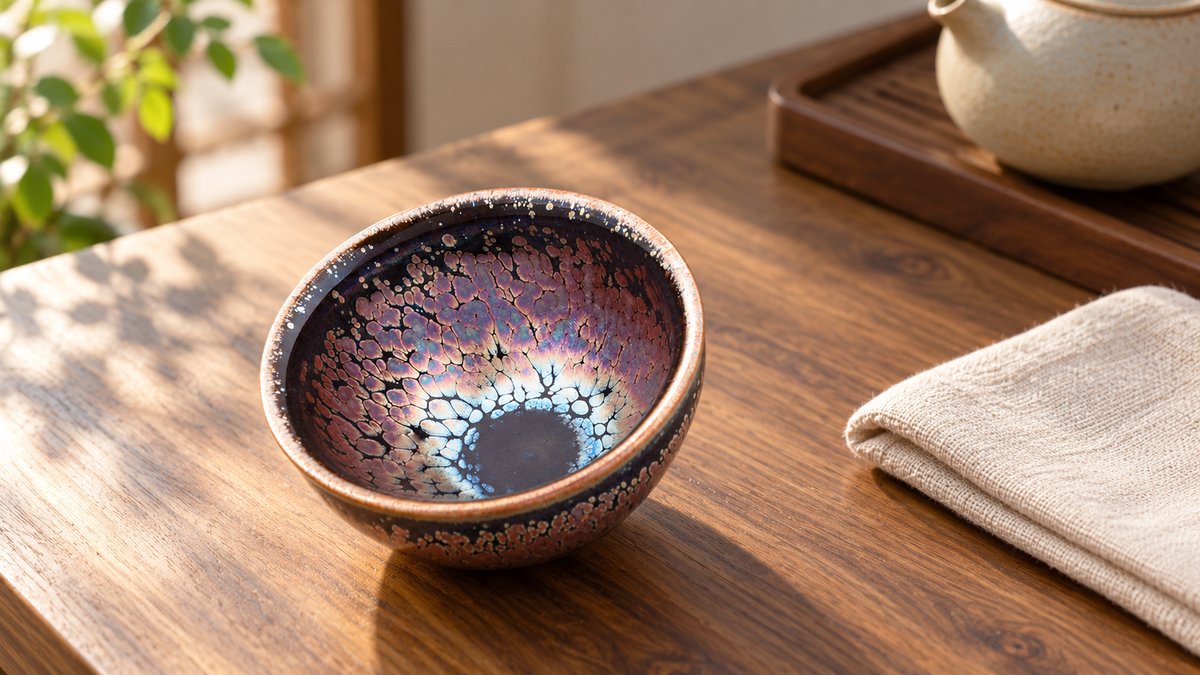
The Flame & Ice Heart Glaze Tea Cup offers a distinctive visual option for a home tea setting. The store photograph shows a handleless bowl form, a copper-brown rim, and purple, blue, and warm-toned patterns across the interior. Those are features you can assess visually; they are not evidence of a particular impact resistance.

Consider this cup if you enjoy looking at the glaze between pours and prefer a handleless serving style. Check the current product details for measurements that matter to you, and ask about anything missing. This article does not assign it a break-resistance rating, promise a service life, or describe it as tougher than another ceramic cup.
Its patterned surface also illustrates an important limit of online shopping: appearance alone cannot settle a question about damage. A product photograph helps you compare the intended finish, but it cannot certify every line on a cup you later receive. Keep your own arrival photographs so you have a record of its initial condition.
Check a new arrival without stress-testing it
Unpack on a clear surface and keep the packaging until you have checked the item. In good light, look at the rim, inside, outside, and base. If you notice a missing piece, an unfamiliar sharp edge, or a line that concerns you, photograph it before using the cup and ask the seller for an assessment.
A useful message includes the product name, order reference, a full view, and a close view of the area. Describe what you can observe, such as “this edge appears chipped,” instead of guessing at a manufacturing cause. The seller may need more information to distinguish the expected finish from transport damage or another issue.
Do not drag a fingertip across a suspected sharp chip. Do not fill an uncertain cup with hot liquid to test a possible crack. Keep it aside while you obtain an answer. If a problem is confirmed, follow the shop's current return or replacement process rather than attempting an improvised repair for drinking use.
Chips, unfamiliar lines, and changes after use
Some ceramic finishes have intentional visual texture. That does not mean every new line is harmless, or that a photograph can distinguish all surface effects from structural damage. Compare with your arrival photos and contact the seller if you see a change. A pattern name containing words such as crackle is not a diagnosis of the condition of your individual cup.
Stop using the piece for drinks if it develops a chip at the drinking edge, starts leaking, or shows a new crack that has not been assessed. Photograph the change and explain when you noticed it. Do not assume that a cup remains suitable simply because it still stands upright or because the damage looks small.
A decorative repair is not automatically suitable for repeated contact with hot drinks. Avoid treating a household adhesive or a cosmetic repair kit as proof that a damaged cup is ready for tea again. If you want to keep the object for sentimental reasons, separating display use from drinking use is a straightforward option.
Everyday habits that reduce avoidable knocks
- Make room before pouring. Move loose objects aside and choose a stable place for both brewer and cup.
- Use a comfortable serving level. Leave space below the rim so lifting does not require balancing a brim-full cup.
- Handle one piece at a time. Avoid carrying several cups by their rims or letting them knock together.
- Keep washing separate from heavy cookware. Follow the product's care requirements and avoid leaving the cup hidden beneath dishes.
- Return it to an uncluttered shelf. Leave enough room to remove it without scraping against adjacent pieces.
Temperature handling deserves its own attention. Avoid abrupt hot-to-cold changes and follow the maker's stated use conditions. A kiln-firing temperature is a production detail, not a household temperature-change allowance. Do not invent a safe temperature difference from that number, and do not transfer permission for hot tea to direct flame, microwave use, or another heating method.
Washing and reheating are separate subjects, so they need not dominate this purchase decision. Our article on tenmoku cups and dishwasher use covers that appliance question. For routine cleaning, see cleaning teacups and preventing tea stains, while giving the exact product's care requirements priority.
Questions buyers often ask
Does a thicker or heavier cup always last longer?
No reliable lifespan follows from weight alone. A cup must also suit your grip and the way you handle it. Without comparable testing, avoid ranking products by resistance to falls or chips. Choose a comfortable shape and keep realistic expectations for ceramic tableware.
Can I stack tenmoku tea cups?
Do not assume nesting cups are designed for storage in a stack. Check the maker's advice. Separate storage avoids placing one cup's weight and base against another cup's rim or interior. If space is limited, measure the shelf before buying several pieces.
Does a higher price mean better durability?
Price can reflect appearance, workmanship, rarity, branding, and other factors. It is not an impact rating. Ask for evidence if durability is the reason for a price premium, and decide what you value without turning a higher cost into a promise of greater strength.
Is a small serving cup practical for daily tea?
It can be, particularly if you brew separately and enjoy repeated pours. If you want one large drink to last through a meeting, compare formats first. Our tea cup capacity chart helps separate serving volume from the amount you comfortably drink at one time.
Choose a cup you can use comfortably
Buy for your actual setting: the space on your table, the way you hold a cup, and your willingness to store it separately from heavy dishes. The Flame & Ice Heart Glaze Tea Cup is a visual option for that kind of tea routine, not a substitute for purpose-built travel drinkware. Enjoy the finish, verify the practical details, and judge durability claims by evidence rather than dramatic promises.
Share:
Can Tenmoku Tea Cups Go in the Dishwasher?
How Many Tea Cups Do You Need? Buying for One, Two or Guests