


What Is Tenmoku Glaze? A Complete Guide to Its History, Colors, and Appeal
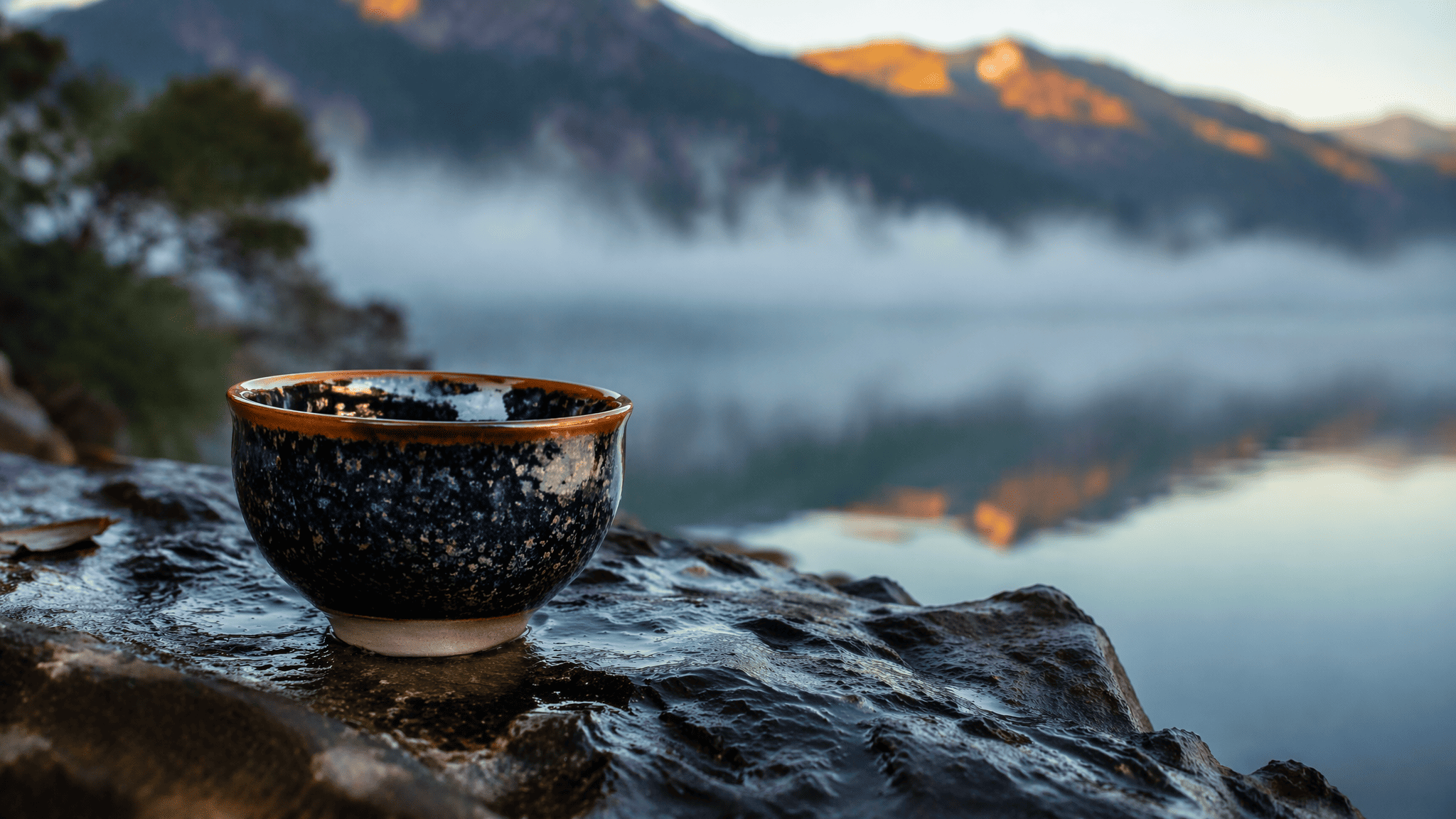
Tenmoku glaze is a dark, iron-rich ceramic glaze known for deep black, brown, amber, and metallic colors. Depending on the glaze formula and firing conditions, its surface may display delicate streaks, silver spots, reddish edges, or blue iridescent patterns. These variations make every finished piece visually distinctive.
Although people often associate tenmoku with Japanese tea culture, its history begins with Chinese black-glazed ceramics. Jian ware tea bowls from the Song dynasty became especially admired in Japan. Japanese monks and tea practitioners helped introduce these bowls into Japanese culture, where they became known as tenmoku tea bowls.
Today, the term tenmoku glaze can describe both historically inspired black glazes and modern ceramic finishes created by potters worldwide. Understanding its origin, materials, appearance, and uses can help you choose a tea bowl that fits your taste and lifestyle.
What Is Tenmoku Glaze?
Tenmoku glaze is generally an iron-rich glaze applied to stoneware or similar high-fired ceramic bodies. It often produces a glossy surface with colors ranging from black and dark brown to amber and rust red.
The final appearance depends on several factors. These include the amount of iron in the glaze, the thickness of application, the clay body, the kiln atmosphere, the peak temperature, and the cooling process.
A thick layer may appear almost black in the center. A thinner layer near the rim may become brown, amber, or reddish. This change happens because light passes differently through thinner and thicker areas of glaze.
Some tenmoku surfaces appear smooth and uniform. Others develop flowing streaks, crystalline spots, or metallic reflections. These effects are not always painted onto the bowl. They often emerge naturally during firing.
Modern ceramic references commonly describe tenmoku as an iron-saturated glaze. Traditional high-fire versions are often fired around cone 10, although contemporary potters may adapt the style for other firing ranges.
Where Did Tenmoku Glaze Originate?
The historical roots of tenmoku glaze lie in China, especially within the tradition of dark-glazed tea bowls produced during the Song dynasty.
Jian kilns in Fujian produced thick stoneware bowls with dark clay bodies and iron-rich glazes. Surviving examples date from the eleventh through thirteenth centuries. Museum collections describe Jian bowls with black, brown, oil-like, and hare’s-fur surfaces.
These bowls suited the tea culture of their time. Their dark interiors created a strong visual contrast with light tea foam. Their substantial bodies also made them practical for holding warm tea.
Chinese tea bowls later reached Japan. Kyoto National Museum explains that Japanese priests encountered black-glazed bowls connected with Mount Tianmu in China. The Japanese reading of Tianmu became “Tenmoku,” and the name remained associated with this type of tea bowl.
The Metropolitan Museum of Art also notes that Jian wares reached Japan through Buddhist monks who visited monasteries near Mount Tianmu. This cultural exchange helped tenmoku bowls gain an important place in Japanese tea practice.
Therefore, tenmoku is not simply a Japanese invention or a general name for black pottery. It reflects a long artistic connection between Chinese ceramic production and Japanese tea culture.
What Does Tenmoku Glaze Look Like?
Tenmoku glaze does not have one fixed appearance. Its beauty comes from variation.
The base color is usually black, dark brown, or reddish brown. However, the surface may also reveal gold, silver, amber, blue, or purple tones under changing light.
Common visual features include:
-
A glossy black or dark brown background
-
Amber or rust-colored rims
-
Fine vertical streaks
-
Silver or metallic spots
-
Blue or rainbow-like reflections
-
Crystalline patterns
-
Natural pooling around curves
-
Subtle differences between the inside and outside
Light plays an important role in how the glaze appears. A bowl may look almost black in a dim room. Under sunlight, it may reveal warm brown edges and metallic details.
The shape of the object also changes the visual result. Glaze tends to collect in deeper areas and become thinner along rims or raised surfaces. This movement creates natural color transitions.
Because firing conditions are difficult to reproduce perfectly, two bowls made with the same glaze can still look different. For many buyers, this variation is a central part of the appeal.
What Are the Main Types of Tenmoku Glaze?
Several glaze effects are closely associated with tenmoku ceramics. Their names usually describe patterns that appear after firing.
Hare’s-Fur Tenmoku
Hare’s-fur glaze displays fine vertical streaks that resemble the fur of a hare. These streaks may appear brown, silver, gold, or bluish against a dark background.
Historic Jian ware bowls with hare’s-fur decoration survive in major museum collections. The British Museum describes examples with black glaze and metallic streaking, while the Metropolitan Museum identifies similar Song dynasty tea bowls as Jian ware.
Oil-Spot Tenmoku
Oil-spot glaze shows round metallic spots across the surface. The dots can resemble droplets of oil floating on water.
These patterns develop through the behavior of iron compounds during firing. Some oil-spot effects depend on oxidation rather than the reduction conditions commonly used for other tenmoku glazes.
Yohen Tenmoku
Yohen tenmoku is famous for luminous spots surrounded by blue, violet, or rainbow-like halos. Genuine historical examples are extremely rare.
Modern potters continue to study and reinterpret yohen effects. However, not every blue or iridescent bowl should be treated as an equivalent to a historic yohen bowl.
Tea-Dust Glaze
Tea-dust glaze has a dark base covered with fine green, yellow, or golden crystalline particles. It usually appears softer and more matte than glossy black tenmoku.
Its appearance can change significantly according to the cooling schedule. Crystalline development is especially sensitive to kiln temperature and cooling speed.
Persimmon and Reddish Tenmoku
Some iron-rich glazes produce warm red, rust, or persimmon colors. These surfaces may appear redder where the glaze becomes thinner or where iron crystals develop.
They share chemical and visual relationships with black tenmoku, although potters may classify them under more specific glaze names.
| Tenmoku Type | Main Appearance | Typical Colors | Best For |
|---|---|---|---|
| Hare’s Fur | Fine vertical streaks | Black, brown, silver, gold | Traditional tea bowls and collectors |
| Oil Spot | Round metallic spots | Black, silver, gold, blue | Dramatic decorative surfaces |
| Yohen | Iridescent halos and glowing spots | Black, blue, violet, rainbow | Display pieces and distinctive gifts |
| Tea Dust | Fine crystalline speckles | Dark brown, green, gold | Subtle and natural interiors |
| Persimmon | Warm iron-red surface | Rust, red, amber, brown | Earthy tea ware collections |
How Is Tenmoku Glaze Made?
A potter begins by preparing a ceramic body that can withstand high firing temperatures. Dark stoneware clay often complements tenmoku glaze because exposed areas remain visually connected to the dark surface.
The glaze mixture usually contains iron oxide as an important coloring ingredient. Other minerals help control melting, flow, gloss, crystal formation, and surface stability.
The potter applies the glaze by dipping, pouring, spraying, or brushing. Thickness matters. A thin layer may become brown or amber, while a thick layer may turn glossy black.
The piece then enters a kiln. During firing, the glaze melts and reacts with the ceramic body. Iron changes its behavior according to the kiln atmosphere and temperature.
Reduction firing limits the available oxygen inside the kiln. It can produce deep black, brown, and flowing tenmoku surfaces. Oxidation firing contains more oxygen and may support certain oil-spot effects.
Cooling also matters. Some crystals need controlled cooling to grow. Faster cooling may preserve a glossy surface, while slower cooling can encourage more visible crystal formation.
Because so many variables interact, tenmoku production requires careful testing. Small changes can alter the final color, texture, and pattern.
Why Does Every Tenmoku Bowl Look Different?
Tenmoku ceramics often show more variation than mass-produced tableware.
Several factors contribute to this difference:
-
The glaze may be applied by hand.
-
Glaze thickness varies across the surface.
-
The bowl shape changes how the glaze flows.
-
Kiln temperatures differ slightly by position.
-
The firing atmosphere may shift.
-
Cooling speed affects crystal development.
-
The underlying clay changes the final color.
These differences mean that photographs should represent the actual product whenever possible. A buyer should not expect every handmade piece to match one reference image exactly.
Small variations do not automatically indicate poor quality. Uneven color, flowing edges, tiny pinholes, or natural glaze changes may reflect the production process.
However, large cracks, sharp defects, unstable glaze, or exposed areas that affect safe use require separate evaluation. Handmade character should not become an excuse for functional problems.
Is Tenmoku Glaze Safe for Food and Drinks?
A tenmoku appearance alone does not prove that a ceramic item is food safe.
Food safety depends on the complete glaze formula, firing process, ceramic body, surface condition, and testing. A properly formulated and correctly fired tenmoku glaze can be suitable for tea, matcha, coffee, and other drinks.
Buyers should check whether the seller clearly states that the product is intended for food or beverage use. Reliable listings should also provide care instructions and disclose any restrictions.
Look for the following information:
-
Intended food or drink use
-
Lead and cadmium information
-
Appropriate firing and production standards
-
Microwave guidance
-
Dishwasher guidance
-
Temperature-change warnings
-
Instructions for damaged surfaces
Do not continue using a bowl if the interior develops serious cracks, sharp chips, or unstable surface changes. Decorative tenmoku pieces should not be assumed safe for beverages unless the maker identifies them as functional ware.
A later article in this series will examine whether tenmoku glaze is food safe in greater detail.
What Is Tenmoku Glaze Used For Today?
Tea bowls remain the most recognizable use. Their dark interiors beautifully frame green tea, matcha foam, and amber-colored infusions.
However, modern tenmoku glaze also appears on:
-
Tea cups
-
Coffee cups
-
Matcha bowls
-
Tea sets
-
Plates
-
Serving bowls
-
Vases
-
Decorative vessels
-
Incense holders
-
Collectible ceramics
A tenmoku bowl works especially well in interiors that use wood, stone, linen, and other natural materials. Its dark surface can create a visual focal point without needing bright decoration.
Many buyers also choose tenmoku ware as a gift. The combination of history, craftsmanship, and visual uniqueness gives it more emotional value than ordinary tableware.
How Do You Choose a Tenmoku Bowl?
Begin with the intended use.
A wider bowl provides more room for whisking matcha. A smaller cup may suit concentrated tea. A deeper bowl can retain heat, while a wider open form may cool the drink faster.
Next, review the dimensions. Product photographs can make a bowl appear larger than it is. Check the diameter, height, capacity, and weight.
Study the glaze closely. Decide whether you prefer subtle brown tones, fine hare’s-fur streaks, bold oil spots, or blue iridescent effects.
Check the unglazed foot. It should feel stable on a flat surface. Handmade feet may show trimming marks, but they should not feel dangerously sharp.
Also review:
-
Whether the piece is food safe
-
Recommended cleaning method
-
Microwave and dishwasher guidance
-
Return and damage policies
-
Whether photographs show the actual item
-
Whether a storage or gift box is included
Price should reflect the quality of the ceramic body, firing process, glaze result, finishing, presentation, and maker’s expertise. A high price alone does not prove authenticity or craftsmanship.
Is Tenmoku the Same as Jian Zhan?
The two terms overlap, but they are not always identical.
Jian Zhan usually refers more specifically to tea bowls connected with Jian ware and the historic ceramic tradition of Jianyang, China.
Tenmoku is a Japanese term historically associated with Chinese black-glazed tea bowls brought to Japan. Over time, it also became a broader ceramic term for related tea bowl forms and iron-rich dark glazes.
Therefore, a historic Jian bowl may be described as tenmoku in a Japanese cultural context. However, a modern tenmoku-glazed cup made elsewhere is not automatically Jian Zhan.
This distinction matters when evaluating origin, craftsmanship, and historical claims. Buyers should read product descriptions carefully rather than relying only on the glaze name.
Why Is Tenmoku Glaze Still Popular?
Tenmoku combines visual depth with functional simplicity.
Its surface changes as the light changes. A bowl that looks black from one angle may reveal gold, brown, or blue details from another. This gives the object a sense of movement.
The glaze also connects modern users with a long ceramic history. Song dynasty Jian bowls, Japanese tea culture, and contemporary studio pottery all contribute to its meaning.
At the same time, tenmoku feels suitable for modern interiors. Its dark colors work well with minimalist, rustic, traditional, and contemporary spaces.
Most importantly, it makes an everyday ritual feel more intentional. Preparing tea in a visually distinctive handmade bowl can encourage slower, more attentive use.
Frequently Asked Questions About Tenmoku Glaze
Is tenmoku glaze always black?
No. Black is the most familiar base color, but tenmoku glaze can also appear dark brown, amber, rust red, gold, silver, blue, or violet. Glaze thickness, iron content, firing atmosphere, and cooling conditions influence the final result. Thin areas often look warmer and lighter, while thick areas may appear deeper and darker.
Is every tenmoku bowl handmade?
No. Some tenmoku bowls are handmade, while others are produced with molds or standardized factory processes. The glaze itself does not prove how the bowl was formed. Buyers should check whether the product description explains the shaping, glazing, firing, and finishing process.
Can you drink coffee from a tenmoku bowl?
Yes, provided the bowl was made as functional food-safe ware. Its dark glaze can suit both coffee and tea. However, buyers should confirm the intended use, capacity, heat resistance, care guidance, and surface condition before using any ceramic bowl for hot drinks.
Why are tenmoku bowls different from one another?
Differences come from glaze thickness, bowl shape, kiln position, firing atmosphere, temperature, clay composition, and cooling speed. Handmade application creates further variation. These factors influence color, flow, crystals, streaks, and metallic effects.
Are tenmoku bowls valuable collectibles?
Some historic Jian and tenmoku bowls have major cultural and museum importance. Modern bowls may also appeal to collectors because of their craftsmanship or unusual glaze results. However, not every tenmoku bowl is rare or financially valuable. Buyers should avoid assuming that appearance alone proves age, origin, or investment value.
Final Thoughts
Tenmoku glaze is an iron-rich ceramic finish with deep colors, flowing patterns, and a history connected to Chinese Jian ware and Japanese tea culture.
Its beauty does not come from perfect uniformity. It comes from the relationship between glaze, clay, heat, atmosphere, cooling, and light. Those variables create the streaks, spots, color transitions, and reflective details that make each piece distinctive.
For a first purchase, focus on function before rarity. Choose the right size, confirm food safety, review care instructions, and select a glaze pattern that you will enjoy using regularly.
A well-chosen tenmoku bowl can serve as functional tea ware, a meaningful gift, and a lasting part of a personal tea ritual.
Share:
How to Identify Authentic Jianzhan Teacups?
Tenmoku Glaze Meaning: What Does Tenmoku Really Mean?