

A tea ceremony at home can begin with a clear table, a brewing vessel you can handle comfortably, and a cup you enjoy using. You do not need to buy every accessory at once. The more useful question is how the pieces work together: can you pour without rushing, serve everyone a comfortable amount, and clean up easily enough to repeat the experience tomorrow?
An informal home tea ritual can center on loose-leaf tea, a gaiwan or teapot, and small drinking cups. Specific ceremonial traditions have their own practices; a casual home session can follow your everyday routine. A practical arrangement pairs the brewer's working volume with comfortable cup portions and leaves enough room for an unhurried pour.
Decide what your home tea session should feel like
Before choosing a glaze or counting accessories, picture the occasion. A quiet cup before work calls for a setup that can be unpacked and washed quickly. Tea for two after dinner benefits from a comfortable pouring sequence and enough room for both people to reach their cups. A larger gathering needs more serving capacity or a willingness to brew several rounds.
Write down three things: how many people usually join you, how much time you want to spend, and where the equipment will live. These details make buying decisions much clearer. A large coordinated set can look inviting, but it may be inconvenient if you have only a narrow shelf and a small kitchen sink. A single carefully chosen cup can be the better first purchase if you already own a suitable brewer.
- For a solo daily ritual: start with one brewer and one cup, using a tray or washable mat to define the space.
- For two people: consider a serving pitcher so you can finish pouring the infusion before dividing it between cups.
- For occasional guests: count your actual drinking cups and plan smaller rounds rather than filling every cup to the rim.
- For a gift: choose around the recipient's existing brewing habits and check the selected option's package contents.
The jobs of the main tea utensils
The brewing vessel holds the leaves and water during steeping. The drinking cup receives the finished tea. A serving pitcher sits between those stages: it collects the infusion before you distribute it. Keeping these jobs separate makes it easier to choose pieces without assuming that every bowl-shaped object serves the same purpose.
A gaiwan is a lidded bowl commonly used for brewing and pouring loose-leaf tea. Its lid can help retain the leaves as you pour, but the handling takes practice. A teapot may be more comfortable if you prefer a handle and a defined spout. Neither choice requires you to replace cups that already suit your hands and your table.
| Piece | Main job | What to check before buying | When it is useful |
|---|---|---|---|
| Gaiwan | Steep leaves and pour the infusion | Capacity, rim shape, lid fit and grip comfort | Small, repeated loose-leaf infusions |
| Teapot | Brew and pour through a spout | Handle clearance, balance and brewing volume | Drinkers who prefer a handled brewer |
| Serving pitcher | Collect tea before dividing portions | Enough working room for the brewed liquid | Sharing one infusion between several cups |
| Small drinking cup | Hold a manageable serving | Rim, base, width and comfortable fill level | Short rounds with time to taste each pour |
| Tray or mat | Organize and help protect the table | Stability, footprint and easy cleaning | Any setup where small spills are possible |
Match capacity to the people at your table
Capacity is more useful than a photograph when you are planning servings. A close-up can make a small tasting cup appear similar to a breakfast mug. Check the stated milliliters, then remember that a comfortable serving normally leaves space below the rim. Your pouring habits, the leaves in the brewer, and the shape of the vessel all affect the amount of tea you actually serve.
As a planning example, two portions of about 30 ml require about 60 ml of brewed tea. Four similar portions require about 120 ml. These are examples for organizing a session, not promises about the output of a particular gaiwan. Leaves occupy space and retain liquid, and a listed capacity does not necessarily describe the amount you can pour comfortably in one motion.
Once your teaware arrives, use cool water and a measuring jug to measure its practical working volume. Fill only to the level you can control, pour into the jug, and compare that amount with your preferred cup serving. This simple check is more reliable than dividing the advertised brewer capacity by the advertised cup capacity and assuming the result is an exact guest count.
A coordinated example: the Sunflower Tenmoku tea set
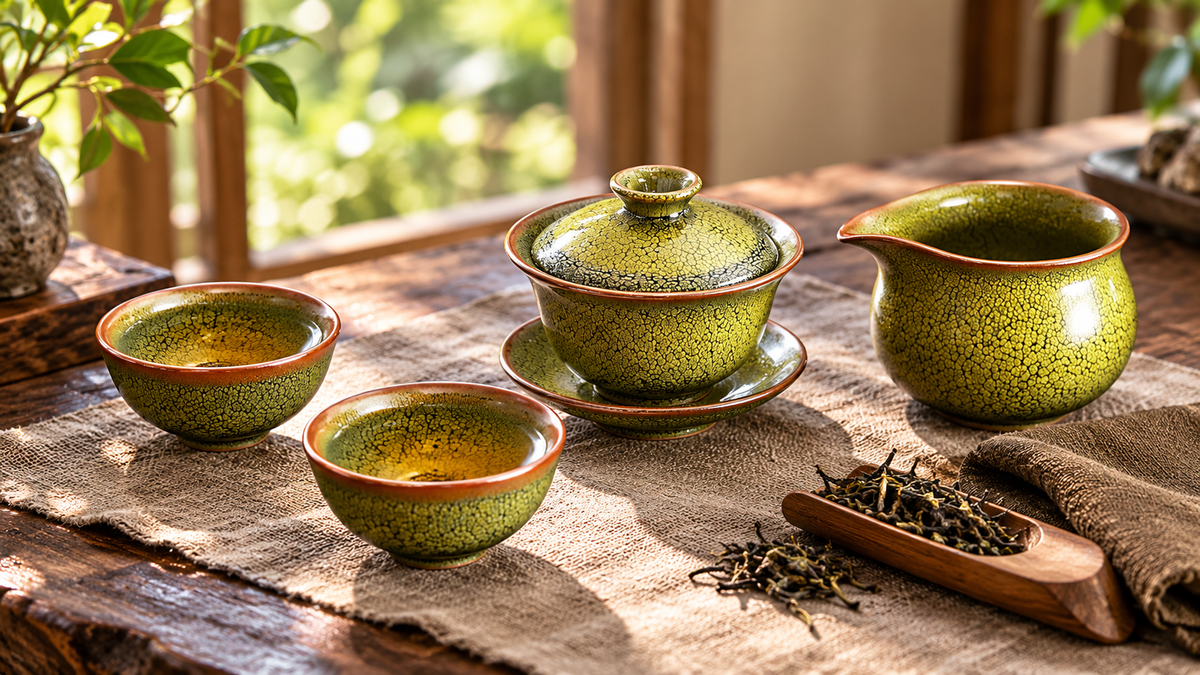
The Sunflower Tenmoku Ceramic Tea Cup Set offers a coordinated visual direction for a home tea table. Its product photographs show rounded pieces with an olive-green, finely patterned glaze and contrasting brown rims. A matching finish can make the table feel composed without requiring additional decorative objects.

The current product description lists a 50 ml tea cup, a 100 ml gaiwan, and a 200 ml tea serving pot. These figures show the relative scale: the drinking cup is small, and the serving vessel has a larger listed capacity than the gaiwan. They do not mean that every cup shown can be filled from one infusion, or that you should fill any piece to its maximum.
For a relaxed session with another person, think in modest pours and repeat infusions as appropriate for the tea. If you are hosting more people, plan the serving sequence before everyone sits down. Also check the package list before ordering. A product photograph is helpful for appearance, but it should not be your only evidence for the number of included pieces or any accessories.
Building gradually instead of buying a complete set
You can also build a home tea arrangement one piece at a time. If you already have cups, choose a brewer that works with their serving size. If you already have a teapot, a new drinking cup may be all you need. Start with the gap in your current routine rather than buying another version of something that already works.
The Celadon Gaiwan is another option to consider when you want a visually quieter brewing centerpiece. Its product photos show a pale green surface with a textured pattern, a lid, and a matching saucer. Compare the current listing's details with your existing cups before choosing it; appearance alone cannot establish its working capacity or how comfortable it will be in your hand.

There is no requirement for every piece to match. A textured gaiwan can sit comfortably beside plain cups, and a favorite Jianzhan cup can be used with a brewer you already own. Keep the relationship practical: sufficient space for pouring, stable bases, and serving sizes that suit the same session.
Arrange the table around the pouring sequence
Set out the empty pieces before heating water. Put the brewing vessel where you can reach it without stretching, leave a clear place to set down its lid, and position the serving pitcher close enough that pouring does not require crossing over someone else's cup. Place drinking cups within easy reach of the people who will use them.
Keep the kettle on a stable, heat-resistant surface, with its cord clear of the table edge and walking route. A cloth should be close enough to catch a small drip but should not make the vessels wobble. Leave decorations out of the pouring path. A tea table feels welcoming when people can use it comfortably, not when every available space is filled.
For a compact apartment, a removable tray can help you carry the dry equipment to the table and return it to storage afterward. Check that the tray can support the arrangement without crowding. Avoid carrying an overloaded tray of hot, full vessels; make the table ready first and bring hot water separately with care.
A simple first session, step by step
- Inspect and prepare the teaware. Check the rims and bases, wash according to the product's care requirements, and place everything on a stable surface.
- Practice the movement with cool water. Test how the lid sits and how the vessel pours before adding heat. Choose a handled brewer if the gaiwan grip does not feel secure.
- Choose one familiar tea. Follow the tea supplier's recommended starting quantities and settings for leaf quantity, water temperature and steeping time rather than using one recipe for every tea.
- Leave working space below the rim. Do not fill the brewer or cups simply because they can hold more. Keep fingers away from hot liquid and escaping steam.
- Pour the infusion deliberately. If using a pitcher, transfer the brewed tea into it before sharing portions. Avoid leaving the leaves submerged longer than intended while you distribute cups.
- Pause and adjust. Notice whether the serving size and pace feel comfortable. Change one brewing variable at a time when adjusting taste.
- Finish with a manageable cleanup. Let the pieces cool, remove the leaves, and dry the equipment before putting it away.
The first session is also a useful test of your purchase choices. Perhaps the cup is comfortable but the tray is too small, or the pitcher makes sharing easier than pouring directly. Write down the one inconvenience you actually noticed. That gives you a better reason for the next accessory than a generic list of things a tea table supposedly needs.
Choose gifts by the recipient's routine
A tea-themed gift is most useful when it fits the way the recipient already drinks. Someone who enjoys several small infusions may appreciate a coordinated set. Someone who brews a large pot and drinks at a desk may prefer an individual cup with enough room for their usual serving. A beginner may value straightforward handling more than an elaborate selection of utensils.
Before ordering, distinguish a single cup presented in a gift box from a multi-piece brewing set. Check the selected variant, item count, capacities and packaging description. If the recipient needs a ready-to-use setup, confirm which separate items they will still need, such as a kettle or tea. Attractive presentation cannot replace a clear list of what arrives in the package.
For a broader comparison of package lists and buying priorities, read Tea Sets for Everyday Use and Gifting. For background on tea rituals rather than shopping decisions, see What Is Tea Ceremony?
Care that makes tomorrow's tea easier
Follow the stated care requirements for each individual piece. When appliance suitability is not stated, do not assume that the teaware is dishwasher, microwave or stovetop compatible. A conservative everyday approach is gentle hand washing with a soft sponge, thorough rinsing, and complete drying. Avoid sudden temperature changes and abrasive cleaning tools.
Store lids where they cannot slide into another vessel, and avoid stacking pieces so that their rims press together. If a piece develops a chip or crack, stop using it for hot drinks until you have assessed whether replacement is needed. Good storage is particularly important for a set that you move in and out of a cupboard daily.
Questions to settle before you buy
Do I need a full tea ceremony set?
No. For an informal home ritual, begin with a suitable brewing vessel and a drinking cup. Add a pitcher, extra cups or a tray when they solve a specific problem in the way you prepare and share tea.
Can I use a Jianzhan cup with a different gaiwan?
Yes, you can assemble separate pieces around your own preferences. Compare their practical capacities and handling rather than relying on a matching glaze. The cup receives the brewed tea; it does not need to be part of the same product range as the brewer.
How many people can a small gaiwan serve?
That depends on the amount of brewed liquid you pour and the size of each portion. Test the working volume and allow for leaves and headroom. For more guests, choose smaller rounds, a larger suitable brewer, or another brewing cycle rather than overfilling.
What should I buy first?
Buy the piece that removes the biggest obstacle from your current routine. That might be a comfortable cup, a controllable brewer, or a serving pitcher. If your existing equipment already works well, you can begin the ritual without buying anything.
A satisfying home tea ceremony grows from comfortable repetition. Choose pieces you can handle confidently, match capacity to real servings, and keep the table easy to use. Choose the Sunflower Tenmoku Ceramic Tea Cup Set for a coordinated arrangement, or consider the Celadon Gaiwan as one part of a setup you build gradually.
Share:
Tea Sets for Everyday Use and Gifting: What to Check Before Buying