

Choosing a Jian Zhan cup is easier when you decide how you will use it before choosing a glaze. A dramatic photograph may catch your eye, but a comfortable rim, suitable capacity, stable base, and clear product information determine whether the cup will work in your tea routine. This guide gives you a practical way to compare contemporary Jian Zhan and Tenmoku-style pieces, whether you are buying your first cup, adding a different glaze to a collection, or selecting a gift.
Quick answer: Start with your serving style and preferred volume. Compare the shape and rim from more than one photograph, then inspect the actual glaze pattern, care guidance, and seller details. Treat historical names as useful context, not proof of a particular cup's origin or age. If a key specification is missing, ask before ordering.
First, know what the name tells you
Historical Jian ware is associated with tea bowls made at the Jian kilns in China's Fujian province. The Metropolitan Museum of Art describes Song-dynasty Jian tea bowls with dark glazes and patterns such as hare's fur, and notes their use in whisked-tea service. You can see an example in the museum's Jian ware collection record. Those historical objects help explain why dark glazes and visible kiln effects remain attractive today.
That history does not make every modern cup sold as “Jian Zhan” an antique, nor does a “Tenmoku” label by itself prove that a piece came from a particular kiln. Contemporary cups can be excellent functional teaware. The right question for a buyer is what the seller can verify about this specific piece: materials, maker or production details, measurements, finish, and intended use. A product title is a starting point for comparison, not a certificate of provenance.
Choose for the way you serve tea
Think about a normal tea session, not an idealized display shelf. Do you prepare several short infusions in a small brewer? Do you drink alone from one larger serving? Do you want a bowl for whisked tea, or a cup to share tea with friends? The answers change what “comfortable” means. A broad bowl can make the surface of the tea visible and gives you room to whisk, while a smaller cup may suit repeated pours. Neither shape is automatically better.
Measure the amount you normally drink at one time. Fill a cup you already like to your usual level, pour that water into a measuring vessel, and note the milliliters. Then check whether the seller's capacity is a brim-full measurement or a practical serving level. Even when two cups list the same capacity, their rim width and wall thickness can change how they feel in use. If the listing gives no capacity or dimensions, ask for them before deciding. Our teacup size guide explains how to compare smaller and larger serving sizes.
- Repeated tasting pours: prioritize a cup that is easy to lift, empty, and refill.
- Longer solo servings: pay closer attention to volume, weight, and how the rim feels over time.
- Whisked tea: consider whether the opening and internal shape leave room for the preparation method you use.
- Display or gifting: visual impact matters, but ask about the actual package contents and everyday care too.
Examine the silhouette, rim, foot, and interior
A cup's profile affects more than its appearance. Look at side-view photos to judge whether its walls rise steeply or flare outward. Look at the foot: a visible, even base helps you understand how the cup sits on a tray or table. An unusually narrow foot may still be perfectly usable, but it deserves a closer look if stability is important to you. A top-down image shows the interior glaze and how far the decoration extends toward the center.
The rim is the part you contact every sip, so its finish deserves attention. Check whether it appears smooth and continuous in close-up photos. You cannot reliably judge lip comfort from a distant product image, but a detailed rim photograph is more informative than a single styled shot. If the piece is meant for regular use, ask the seller about any roughness or sharp areas you cannot resolve from the images. When shopping for a gift, a familiar, easily handled shape may be safer than a highly unusual form unless you know the recipient's preferences.
Compare glaze patterns without expecting identical copies
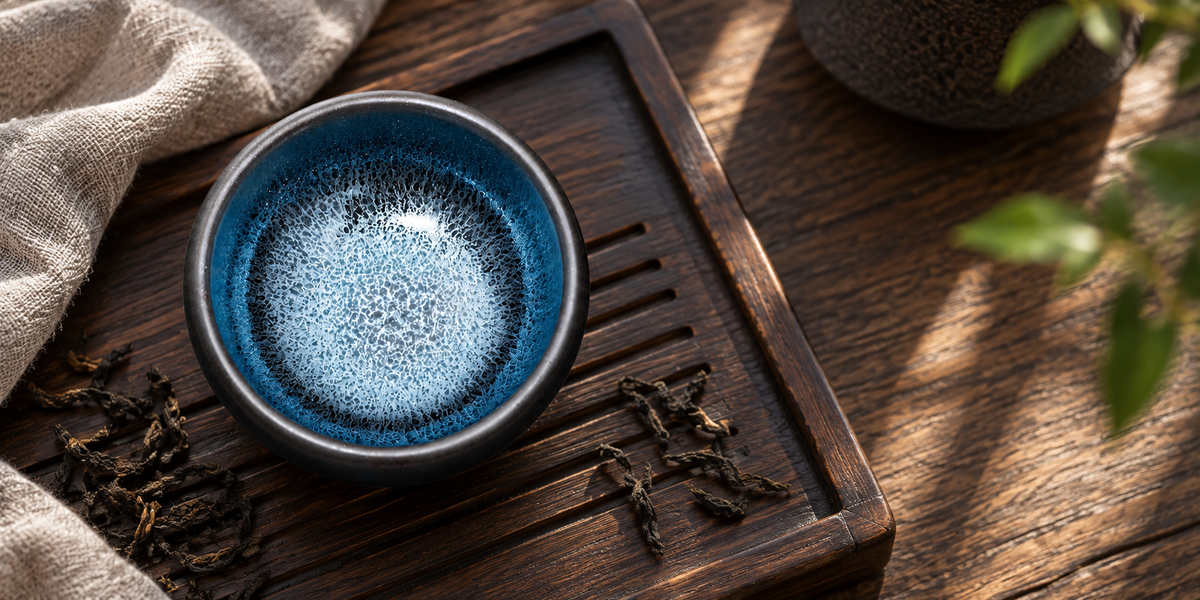
Jian-related visual vocabulary includes hare's-fur streaks, oil-spot effects, and other kiln-varied finishes. The Museum's discussion of Jian tea bowls explains how dark, iron-rich glazes can produce different visible patterns during firing; its ceramics essay offers useful historical context. On a contemporary product page, focus on the photographs of the piece or variant actually offered. Different lighting and camera angles can make one glaze appear more blue, silver, or brown.
Compare at least one close-up, one side view, and one interior view. If a listing has variants, confirm which photographs belong to the option you are selecting. A glaze name such as “oil spot” tells you the visual family, but not the exact density, size, or placement of marks on an individual cup. That variation is part of the appeal for many buyers; it should also be described honestly. Ask whether you will receive the photographed piece or an item with a similar pattern.

Use a simple buying comparison
When two attractive cups compete for your attention, give each one the same set of questions. The table is a checklist, not a ranking system: your use case determines which answer matters most. Do not award extra value just because a listing uses more technical-sounding terms.
| Check | What to look for | Why it matters | If missing |
|---|---|---|---|
| Capacity | Milliliters and whether the figure is brim-full or serving volume | Matches your usual pour and number of drinkers | Ask for a measured fill level |
| Dimensions | Rim diameter, height, and foot width | Helps judge handling and storage | Request measurements with a scale |
| Glaze | Close-ups of interior, exterior, rim, and actual variant | Reduces surprises about color and pattern | Ask for current photos |
| Use and care | Food-contact suitability and washing guidance | Separates functional teaware from decorative pieces | Confirm with the seller |
| Seller details | Maker information, variant mapping, packaging, and returns | Sets expectations for what arrives | Clarify before checkout |
Three starting points in our collection
Use actual product pages to practice the checklist. The Blue Kirin Zen Jianzhan Teacup has a dark exterior and a blue-and-pale interior visible in its photographs. Compare its top and side views if that contrast appeals to you. The Bamboo Hat-Shaped Oil-Spot Glaze Jianzhan Cup offers a different pattern to examine at close range. The Golden Lotus Handmade Jianzhan Teacup has multiple listed variant names, so it is especially important to match the selected option to the right photographs before buying.
These examples are not a quality ranking. Their product pages currently present different visual choices, but you should verify measurements, care, package contents, and the current price on each listing. If you want to scan a wider range first, browse the Jian Zhan collection. Add two or three candidates to a shortlist instead of buying the first cup whose glaze looks impressive in a thumbnail.

Check food-contact claims and care instructions
If you intend to drink from the cup, verify that the seller identifies it as suitable for food contact. A high firing-temperature claim or a dark glaze alone does not answer that question. The U.S. Food and Drug Administration advises consumers to be careful with ceramics whose safety or intended use is uncertain, especially antique, damaged, or decorative pieces; see its guidance on lead-glazed pottery. This is a general purchasing precaution, not a claim that a particular product in this collection is unsafe.
Ask whether the cup is meant for hot drinks, how it should be washed, and whether the seller recommends avoiding a dishwasher, microwave, or abrupt temperature change. Care guidance can vary by product and decoration. Once your cup arrives, inspect it before first use, follow the seller's cleaning instructions, and set aside any piece with a concerning chip or damage in the food-contact area until you have clarified its suitability. For a gift, include the care information so the recipient does not have to guess.
Separate contemporary use from collecting claims
You do not need an antique to enjoy a Jian-style cup. A contemporary piece can be chosen for the way it looks and feels in everyday tea service. If you are paying a premium for a claimed origin, maker, or rare kiln effect, however, ask for evidence that belongs to that particular item. A generic story about the Song dynasty does not document a cup made today. Clear photos of the underside, maker's mark if present, dimensions, condition, and seller's sourcing information are more useful than an unsupported “authentic” label.
Be equally careful with claims about production hours, rejection rates, or health benefits. Unless the seller can explain and substantiate a number, do not use it as your main reason to buy. Focus first on observable details and the seller's policies. Our existing guide to identifying Jianzhan teacups goes deeper into authenticity questions, while this article stays focused on choosing a cup that fits your needs.
Buying as a gift
When you are buying for someone else, reduce the number of assumptions you make. Think about whether the recipient drinks small repeated servings or one larger cup, whether they prefer a restrained dark surface or a bright kiln-varied pattern, and whether they have space to store a bowl-shaped vessel. A visually striking cup can be a good gift, but it should still be comfortable to use and easy to care for.
Before checkout, check whether the listing is for one cup, a variant of one cup, or an actual set. Confirm the package contents and any gift packaging rather than relying only on the collection name. Our tea cup gifts collection includes both individual cups and products listed as gift sets. If you are uncertain, choose a product with clear photos, stated specifications, and a care note that can be passed along to the recipient.
A five-step shortlist before checkout
- Write down your intended use: repeated pours, a longer personal serving, whisked tea, display, or a gift.
- Measure a cup you already enjoy, then compare the listed capacity and dimensions of two or three candidates.
- Study each candidate's side, top, interior, rim, and foot photographs. Match variants to their images.
- Confirm food-contact suitability, care instructions, actual package contents, and seller policies.
- Choose the cup that fits your use and preferences, not simply the one with the most dramatic glaze name.
That process makes the decision manageable. It also helps you identify exactly which question to send a seller if the listing is incomplete. Explore the Jian Zhan cups and bowls currently available in the store, and keep the checklist open as you compare them.
Frequently asked questions
Is Jian Zhan the same as Tenmoku?
The terms are related in tea-ceramic history but are not interchangeable proof of origin for a modern product. Historical Jian ware refers to ceramics associated with the Jian kilns in China. “Tenmoku” is used in Japanese and modern commercial contexts for a broader family of dark-glazed tea bowls and cups. Read the individual listing for the actual maker, material, and provenance rather than treating either term as a guarantee.
Which glaze should a beginner choose?
Choose the surface you will enjoy seeing in your normal lighting, then check the practical details. A familiar oil-spot or hare's-fur-style pattern may be a useful starting point, but there is no universally best glaze. Look for several photographs of the actual product or variant so you can judge the interior and exterior. If the pattern varies from piece to piece, ask what level of variation to expect.
Do I need a large bowl or a small cup?
Match the vessel to your tea service. A larger bowl can suit preparation methods that need working room; a smaller cup can fit repeated tasting pours. Measure your usual serving first and consider how many people share the tea. Product capacity may be a brim-full number, so ask for a comfortable serving volume when that distinction matters to you.
Can I assume a decorative cup is safe for hot tea?
No. A piece's appearance does not establish its intended use. Check the seller's food-contact and hot-drink guidance for that exact item, especially if it is antique, damaged, or presented primarily as decoration. If the information is missing, ask before using or buying it as functional teaware.
What if the product page has no measurements?
Ask the seller for capacity, rim diameter, height, and a clear photograph beside a ruler or another scale. Those details help you compare options without guessing from camera perspective. If you are choosing between two cups and only one has adequate information, that clarity is a practical advantage, even if the other cup looks more striking in a single photograph.
Share:
What Is Handmade Pottery? A Guide to Ceramic Tea Ware
How To Choose Tea Bowl: A Consumer Guide