


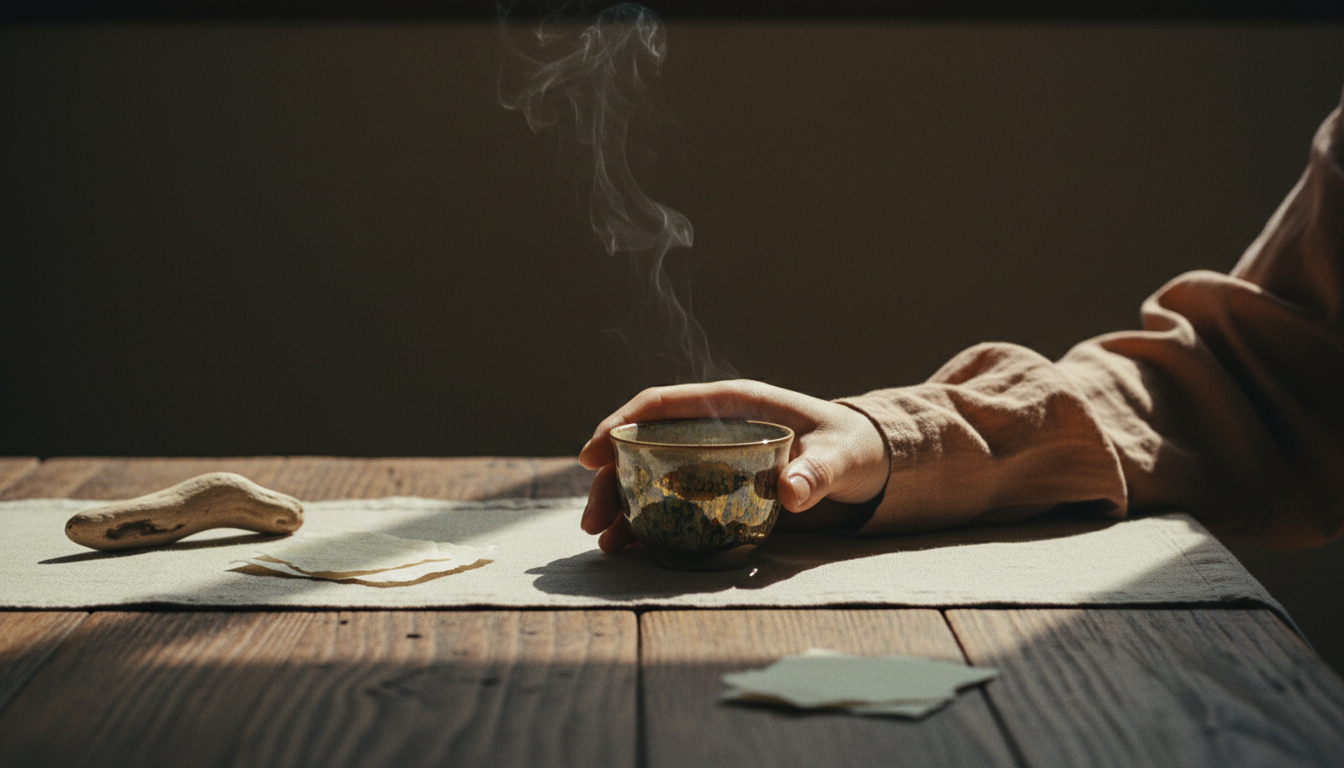
When people admire a Tenmoku tea bowl today, they often focus on its shimmering glaze, dramatic crystal patterns, or elegant form. Yet behind every handmade bowl lies a remarkable story that stretches back more than nine hundred years. The history of Tenmoku glaze is not simply the history of a ceramic finish—it is the story of cultural exchange, technological innovation, and the enduring relationship between tea and craftsmanship.
From the mountain temples of ancient China to Japanese tea ceremonies and modern ceramic studios around the world, Tenmoku glaze has traveled across cultures while preserving its unique identity. Understanding this history allows tea lovers and collectors to appreciate that every bowl carries a legacy shaped by generations of skilled artisans.
The Birth of Tenmoku Glaze During the Song Dynasty
The history of Tenmoku glaze begins during China's Song Dynasty (960–1279), a period widely regarded as one of the greatest eras of ceramic production. At that time, tea drinking had become an important cultural activity. Scholars, monks, and members of the imperial court all appreciated tea, and competitions for preparing whisked tea became increasingly popular.
To support these tea competitions, potters in Jianyang, Fujian Province, began producing dark-glazed tea bowls that highlighted the bright white foam created by whisked tea. Unlike light-colored ceramics, the deep black surface provided strong visual contrast, making it easier to judge the quality of the tea.
These bowls were fired at extremely high temperatures using iron-rich glazes. During firing, natural chemical reactions produced extraordinary surface effects that no artist could paint by hand. The unpredictable beauty of these kiln-created patterns soon became one of the defining characteristics of Jian ware.
Although modern audiences often use the term "Tenmoku glaze," these original bowls were known in China as Jian ware or Jian Zhan.
Why Tianmu Mountain Became Part of the Story
The name "Tenmoku" has its roots not in a pottery workshop but in a mountain.
Tianmu Mountain, located in Zhejiang Province, was an important center of Buddhist learning. During the Song Dynasty, Japanese monks frequently traveled to China to study Buddhism and tea culture. Many visited temples near Tianmu Mountain before returning home.
Among the objects they carried back to Japan were the remarkable dark tea bowls produced in Jian Kiln. Because these bowls became associated with Tianmu Mountain, the Japanese pronounced the name as "Tenmoku."
Over time, the word no longer referred only to the mountain. It gradually became the accepted Japanese name for these distinctive tea bowls and later for the glaze style itself.
This simple change in pronunciation marked the beginning of one of ceramic history's most fascinating cultural exchanges.
The Connection Between Tea Culture and Tenmoku Bowls
Tea played a central role in the popularity of Tenmoku glaze.
During the Song Dynasty, powdered tea was whisked into a fine foam. The quality of that foam was considered an important measure of tea preparation. Dark bowls created the perfect background against which the white foam could be judged.
As tea culture evolved in Japan, the appreciation for these bowls grew even stronger.
Japanese tea masters admired not only the practical function of Jian bowls but also their quiet elegance. Their natural imperfections reflected ideas that later became closely associated with simplicity, balance, and the appreciation of handmade objects.
Rather than decorating bowls with colorful paintings or elaborate carvings, Tenmoku ceramics allowed the kiln itself to become the artist.
How Ancient Potters Created Extraordinary Glaze Effects
The remarkable appearance of Tenmoku glaze was achieved through careful observation rather than modern scientific equipment.
Potters developed glaze recipes containing significant amounts of iron oxide. They learned that small adjustments in kiln temperature, airflow, cooling speed, and wood fuel could dramatically influence the final appearance.
Because wood-fired kilns naturally produced changing temperatures, every firing became a unique experiment.
Sometimes crystals formed long streaks resembling rabbit fur.
Sometimes tiny metallic spots appeared across the surface.
Occasionally, exceptionally rare rainbow-like iridescence emerged.
Although ancient potters did not fully understand the chemistry involved, centuries of experience allowed them to refine their techniques through practice and observation.
Today, ceramic scientists can explain many of these reactions, but reproducing them consistently remains surprisingly difficult.
Famous Types of Historic Tenmoku Glaze
Over centuries, several glaze patterns became especially admired by collectors and tea practitioners.
Hare's Fur
Hare's Fur glaze displays long, delicate streaks flowing from the rim toward the base of the bowl. These streaks form naturally as iron crystals separate during cooling.
This became one of the classic Song Dynasty glaze styles and continues to inspire ceramic artists today.
Oil Spot
Oil Spot glaze features countless reflective circles scattered across a dark background. Depending on lighting conditions, these spots may appear silver, gold, blue, or even rainbow colored.
Creating evenly distributed oil spots requires exceptional control during firing, making successful examples highly desirable.
Yohen
Yohen Tenmoku is among the rarest ceramic achievements in history.
Its iridescent surface shifts color as light changes, creating an almost cosmic appearance. Only a handful of historical Yohen bowls survive today, and they are considered priceless cultural treasures.
Tea Dust
Tea Dust glaze offers a more understated beauty.
Instead of bold crystal formations, countless tiny speckles create a soft, refined texture that reflects quiet elegance rather than dramatic visual effects.
The Decline and Revival of Jian Ware
Despite its popularity during the Song Dynasty, traditional Jian ware gradually declined after political and cultural changes reshaped Chinese society.
Tea preparation methods also changed. Loose-leaf tea became increasingly common, reducing the practical need for dark bowls designed specifically for whisked tea.
Many historic kiln sites were eventually abandoned.
For centuries, the techniques used by Song Dynasty potters were largely forgotten.
Interest returned during the twentieth century as archaeologists uncovered ancient kiln remains and ceramic researchers began studying surviving examples. Modern artisans carefully examined historical pieces, experimented with traditional materials, and gradually rediscovered many of the original firing methods.
Although today's craftsmen benefit from improved equipment and scientific knowledge, recreating authentic Song-style glaze effects still demands years of experience.
Tenmoku Glaze Around the World
What was once a regional ceramic tradition has now become an international art form.
Artists in Japan, China, Europe, North America, and Australia all create their own interpretations of Tenmoku glaze.
Some follow traditional wood-firing methods.
Others experiment with electric kilns or gas kilns while preserving the visual character of classic Tenmoku surfaces.
Contemporary ceramic schools frequently teach Tenmoku glazing because it demonstrates how chemistry, craftsmanship, and artistic vision can work together.
Collectors also appreciate the fact that every firing remains unpredictable. Even with modern technology, complete control is impossible.
That uncertainty continues to give Tenmoku ceramics much of their charm.

Why Handmade Tenmoku Bowls Continue to Fascinate Collectors
One reason collectors admire Tenmoku bowls is that every piece tells its own story.
Unlike mass-produced ceramics, handmade bowls preserve the marks of the artist's decisions. Slight variations in shape, glaze thickness, firing conditions, and cooling create subtle differences that cannot be repeated.
Many collectors enjoy comparing bowls from different artists to see how each interprets the same centuries-old tradition.
Some prefer dramatic Oil Spot patterns.
Others seek the quiet elegance of Tea Dust glaze.
Many simply appreciate the feeling of holding an object connected to nearly a thousand years of ceramic history.
Choosing a Tenmoku Bowl with History in Mind
Understanding history helps buyers make more informed choices.
Rather than focusing only on appearance, consider the craftsmanship behind the bowl.
Look for signs of careful glazing, balanced proportions, and thoughtful firing. Handmade variation is a positive characteristic rather than a flaw.
If you are beginning your collection, choose a bowl that feels comfortable in your hands and suits your daily tea routine.
As your knowledge grows, you may become interested in different glaze styles, kiln traditions, or historical influences.
Every bowl can become both a practical tea vessel and a reminder of the remarkable journey that Tenmoku glaze has taken across centuries.
Frequently Asked Questions
Is Tenmoku glaze originally Chinese or Japanese?
Tenmoku glaze originated in China during the Song Dynasty through the production of Jian ware in Fujian Province. The name "Tenmoku" was later adopted in Japan after Buddhist monks brought these tea bowls home from China. Today, both countries have contributed significantly to preserving and developing the tradition.
Why are historical Tenmoku bowls so valuable?
Historic Tenmoku bowls are valued because they combine artistic beauty, technical difficulty, and cultural significance. Many original Song Dynasty examples no longer exist, while surviving pieces represent extraordinary ceramic achievements that are extremely difficult to reproduce. Rare glaze types such as Yohen Tenmoku are especially prized by museums and collectors.
Can modern potters still produce authentic Tenmoku glaze?
Modern ceramic artists can produce beautiful Tenmoku glazes using both traditional and contemporary kiln technologies. While scientific understanding has improved, authentic glaze development still depends heavily on experience, firing conditions, and careful craftsmanship. Because each firing remains unique, every handmade bowl retains its own individual character.
Conclusion
The history of Tenmoku glaze is a story of creativity, cultural exchange, and enduring craftsmanship. From the Jian kilns of Song Dynasty China to tea ceremonies in Japan and studios around the world, this remarkable ceramic tradition has continued to inspire generation after generation.
Every handmade Tenmoku bowl reflects more than beautiful glaze. It represents centuries of experimentation, artistic dedication, and respect for the simple ritual of sharing tea. Whether you are purchasing your first bowl or expanding an existing collection, understanding its history adds a deeper level of appreciation that extends far beyond its appearance.
Share:
Tenmoku Glaze Meaning: What Does Tenmoku Really Mean?
Where Did Tenmoku Glaze Originate?