


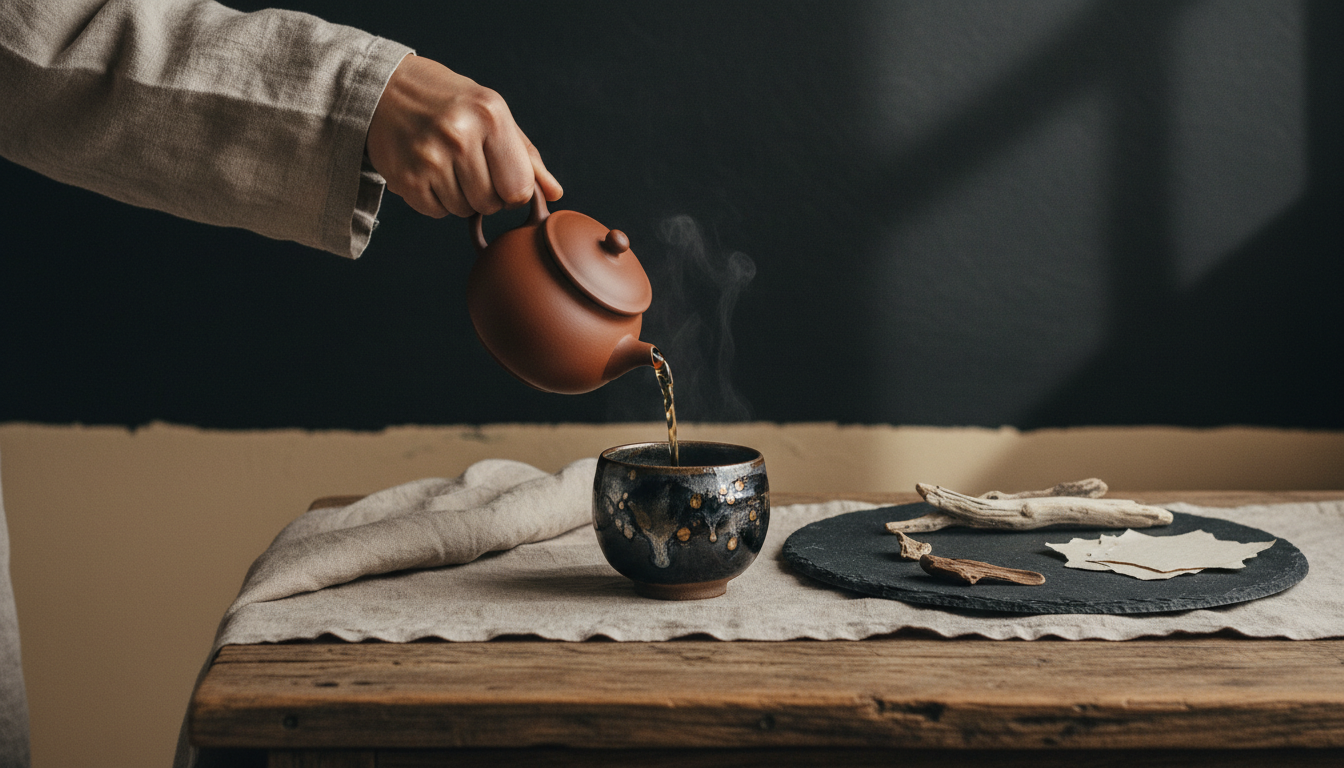
If you have recently started exploring handmade tea bowls, you have probably encountered the term Tenmoku glaze. It appears on product pages, in tea ceremony discussions, and in articles about Japanese and Chinese ceramics. While many people recognize the name, fewer understand what it truly represents.
The meaning of Tenmoku glaze goes far beyond a dark ceramic finish. It reflects centuries of craftsmanship, cultural exchange, and artistic innovation that began in China and later became deeply connected with Japanese tea culture. Today, Tenmoku bowls are appreciated around the world for their rich glaze effects, unique firing patterns, and timeless beauty.
Whether you are shopping for your first handmade tea bowl or simply curious about its history, understanding the meaning of Tenmoku will help you appreciate why these ceramics continue to captivate collectors and tea lovers alike.
What Does Tenmoku Mean?
The word Tenmoku originates from the Japanese pronunciation of Tianmu (天目), a mountain located in Zhejiang Province, China. During the Song Dynasty (960–1279), Buddhist monks frequently traveled between China and Japan to study religion, philosophy, and tea culture. Many of them visited temples near Tianmu Mountain, where dark-glazed tea bowls were commonly used.
When these monks returned to Japan, they brought the bowls with them. Because the bowls were associated with Tianmu Mountain, the Japanese referred to them as Tenmoku chawan, meaning "Tenmoku tea bowls." Over time, the name became closely associated with the distinctive dark glaze itself.

Today, the term "Tenmoku glaze" generally describes a family of iron-rich ceramic glazes known for producing dramatic crystal patterns and deep, glossy surfaces.
The Chinese Origins Behind Tenmoku
Although the word Tenmoku is Japanese, the ceramic tradition began in China.
The original bowls were produced in the famous Jian Kiln located in present-day Jianyang, Fujian Province. During the Song Dynasty, Jian ware became highly valued because its dark surface beautifully highlighted the light-colored foam of whisked tea, which was popular during tea competitions.
Potters developed iron-rich glazes that reacted naturally inside wood-fired kilns. Changes in temperature, oxygen levels, and cooling speed produced extraordinary surface effects that could never be completely controlled. This unpredictability made every bowl unique.
These bowls quickly gained recognition not only for their practical use but also for their artistic beauty. Long before modern ceramic artists embraced kiln effects, Jian potters were already creating naturally occurring patterns that resembled stars, feathers, oil droplets, and flowing silk.
Why Is Tenmoku Different from Jian Zhan?
One of the most common questions beginners ask is whether Tenmoku and Jian Zhan are the same thing.
The answer is both yes and no.
Jian Zhan refers specifically to tea bowls made in Jianyang using traditional Chinese techniques. The term describes their geographical origin and historical production.
Tenmoku, however, is the Japanese name that became widely used after these bowls were introduced to Japan. Over the centuries, Japanese ceramic artists created their own interpretations inspired by the original Chinese pieces.
Think of it this way:
| Term | Meaning |
|---|---|
| Jian Zhan | Traditional tea bowls produced in Jianyang, China |
| Tenmoku | Japanese name for Jian-style bowls and related glaze traditions |
Today, international buyers often encounter both names. Many retailers use "Tenmoku" because it is more familiar to Western audiences, while collectors interested in historical authenticity may prefer the term "Jian Zhan."
Understanding the difference helps buyers appreciate both the Chinese origins and the Japanese influence that shaped the ceramic tradition we know today.
What Makes Tenmoku Glaze Unique?
Unlike painted ceramics, Tenmoku glaze develops its appearance naturally during firing.
The glaze contains a high concentration of iron oxide. Inside the kiln, temperatures often exceed 1,300°C (2,372°F). As the glaze melts and cools, minerals crystallize in different ways depending on factors such as firing atmosphere, cooling speed, glaze thickness, and the clay body beneath the surface.
Because these variables are impossible to reproduce perfectly every time, no two handmade Tenmoku bowls are ever exactly alike.
This natural variation is one of the qualities that attracts collectors. Rather than searching for identical pieces, many enthusiasts enjoy finding bowls with distinctive crystal formations that cannot be duplicated.
Famous Types of Tenmoku Glaze
Several classic glaze patterns have become especially admired throughout history.
Oil Spot Tenmoku
Oil Spot Tenmoku features countless metallic spots that resemble tiny droplets of oil floating on water. Depending on lighting conditions, the spots may appear silver, gold, blue, or rainbow-colored.
Because producing evenly distributed spots requires careful control during firing, high-quality Oil Spot bowls are often considered premium pieces.
Hare's Fur Tenmoku
Hare's Fur Tenmoku is recognized by long, fine streaks stretching from the rim toward the base of the bowl. These lines resemble the soft fur of a rabbit.
This pattern was especially popular during the Song Dynasty and remains one of the most recognizable traditional styles.
Yohen Tenmoku
Among collectors, Yohen Tenmoku is perhaps the rarest and most celebrated variety.
Its surface displays brilliant iridescent colors that seem to shift under changing light. Authentic historical examples are extremely rare, and only a handful survive today in museum collections.
Modern ceramic artists continue experimenting with techniques that recreate this remarkable effect.
Tea Dust Glaze
Tea Dust glaze has a softer appearance than Oil Spot or Hare's Fur.
Instead of dramatic crystals, the surface contains countless tiny speckles that create a smooth, refined texture. This understated style appeals to tea drinkers who prefer elegance over bold visual effects.
Why Tea Enthusiasts Love Tenmoku Bowls
The popularity of Tenmoku bowls is not based solely on appearance.
Many tea drinkers appreciate how the dark interior enhances the visual contrast of green matcha, white tea foam, or golden oolong. The deep color allows the tea itself to become the center of attention.
Handmade bowls also provide subtle variations in weight, texture, and balance that make every tea session feel personal.
Over time, many owners develop an emotional connection with a favorite bowl because it becomes part of their daily tea ritual.
Is Every Black Tea Bowl a Tenmoku Bowl?
No.
This is a common misconception.
Many ceramic bowls feature black glaze, but that alone does not make them Tenmoku.
Authentic Tenmoku glaze is characterized by its iron-rich composition and the natural crystal effects produced during high-temperature firing. A simple glossy black finish without these characteristics may look similar, but it belongs to a different ceramic tradition.
When purchasing a bowl, it is worth reading the product description carefully to understand the materials and firing methods used.
How Is Tenmoku Used Today?
Although Tenmoku bowls have existed for hundreds of years, they continue to fit naturally into modern lifestyles.
Many people use them every day for:
-
Matcha preparation
-
Green tea
-
Oolong tea
-
Black tea
-
Herbal infusions
-
Coffee
-
Meditation rituals
-
Home tea ceremonies
-
Interior decoration
Their versatility makes them suitable for both traditional tea practice and contemporary living.
Many collectors also display their favorite bowls on open shelves where changing natural light reveals different details throughout the day.
How to Choose Your First Tenmoku Bowl
Buying your first Tenmoku bowl does not have to be complicated.
Instead of focusing on rarity or collector value, begin with a bowl that feels comfortable to hold and suits your drinking habits.
Consider the following factors:
-
Handmade craftsmanship
-
Food-safe ceramic materials
-
Comfortable size and weight
-
Smooth drinking rim
-
Stable foot ring
-
Natural glaze variation
-
A pattern that personally appeals to you
Every handmade piece contains small differences, and these variations are considered part of its character rather than imperfections.
As your appreciation grows, you may begin exploring different kiln traditions, firing techniques, and glaze styles.
Caring for a Tenmoku Bowl
Proper care helps preserve the beauty of your bowl for many years.
Wash it gently with warm water and mild soap after use. Avoid abrasive cleaning tools that could scratch the glaze.
Sudden temperature changes should also be avoided. Pouring boiling water into a bowl that is extremely cold may increase the risk of thermal shock.
Allow the bowl to dry completely before storing it, especially if it is handmade stoneware.
With normal care, a quality Tenmoku bowl can remain beautiful for decades.
Frequently Asked Questions
Is Tenmoku Chinese or Japanese?
The ceramic tradition originated in China, specifically in the Jian Kiln of Fujian Province during the Song Dynasty. The name "Tenmoku" is Japanese and became popular after monks brought the bowls from China to Japan. Today, both cultures have made significant contributions to the history and development of Tenmoku ceramics.
Why is every Tenmoku bowl different?
Tenmoku glaze develops naturally inside the kiln through complex chemical reactions involving iron-rich glaze, high temperatures, cooling speed, and kiln atmosphere. Even when the same recipe is used, slight differences during firing create unique crystal patterns. This unpredictability is one of the defining characteristics of authentic handmade Tenmoku ceramics and one reason collectors value them so highly.
Is Tenmoku glaze safe for everyday tea drinking?
A well-made Tenmoku bowl produced with food-safe materials is perfectly suitable for everyday use. Many tea enthusiasts enjoy using Tenmoku bowls for matcha, green tea, oolong, black tea, and even coffee. Purchasing from experienced ceramic makers and following the recommended care instructions will help ensure both safety and long-lasting performance.
Conclusion
Understanding the Tenmoku glaze meaning opens the door to a fascinating world of ceramic history, tea culture, and handmade craftsmanship. What began as a practical tea bowl in Song Dynasty China evolved into one of the most admired ceramic traditions in the world.
Today, every handmade Tenmoku bowl carries that legacy forward. Its unique glaze patterns, natural individuality, and connection to centuries of tea culture make it much more than ordinary tableware. Whether you are beginning your tea journey or expanding an existing collection, learning the meaning behind Tenmoku allows you to appreciate not only its beauty but also the remarkable story that every bowl represents.
Share:
What Is Tenmoku Glaze? History, Types and Uses?
How Did Tenmoku Glaze Shape the History of Ceramic Art?