

Jianzhan cup shapes are easiest to compare from the side: an open bowl widens toward the mouth, a flared rim turns outward near the lip, and an inward-curving rim narrows above the belly. A rounded body can appear with more than one rim treatment, so “round” and “inward” do not mean exactly the same thing. The useful question is not which outline is universally best, but which opening, wall profile, and foot suit the way you serve tea.
Glaze patterns often catch the eye first. Yet two blue, spotted cups can have quite different silhouettes, and two similar silhouettes can carry very different glazes. Separate these features before comparing products. Start with a side photograph, check the opening and base, and then confirm the capacity and dimensions for the particular cup you are buying.
Read the silhouette before the glaze
A cup has three distinct areas to inspect: the rim you drink from, the body that holds the tea, and the foot that rests on the table. Looking at each separately makes product photographs much more useful. An overhead photograph reveals the interior decoration, but it can conceal the point where the wall turns inward or outward. A low side view shows that change more clearly.
- Rim: follow the last section of the wall toward the opening. Does it continue upward, turn outward, or turn inward?
- Body: locate the widest part. It might be at the mouth, just below it, or farther down a rounded belly.
- Foot: check the resting surface and its relationship to the body. A visible foot ring is not the same measurement as the cup's overall diameter.
- Interior: check how the wall meets the bottom. The inside profile determines the space available for tea; the outside alone does not establish capacity.
Keep the camera angle in mind. A cup tilted toward the lens can appear wider and shallower than it is. Compare photographs taken from similar angles, then use written measurements to resolve scale. Neither a decorative name nor a close-up of the glaze replaces a clear profile photograph.
Open, flared, and inward-curving rims compared
The descriptions below are practical visual categories, not certificates of historical form or manufacturing origin. Modern cups may combine features or sit between categories. A gently rounded upper wall does not automatically make a cup a strong inward-rim example, and a wide mouth is not automatically a flared lip.
| Profile | What to look for | Useful comparison | What the shape cannot prove |
|---|---|---|---|
| Open bowl | Walls widen toward the mouth, without a separate outward lip. | Opening width, usable fill level, access for washing. | A particular cooling time or drinking temperature. |
| Flared rim | The upper edge turns outward from the wall below it. | Lip angle and thickness compared with a familiar cup. | Better flavor or a universally more comfortable sip. |
| Inward-curving rim | The upper wall turns inward, making the mouth narrower than the body below. | Actual inner opening, cleaning access, and preferred sipping angle. | A sealed vessel, spill protection, or guaranteed aroma retention. |
| Rounded body | A curved belly rather than a mostly straight-sided cone. | Where your fingers meet the wall and how wide the body is. | A specific rim category, weight, or capacity. |
An open bowl is not always a flared cup
Imagine tracing a line from the foot to the lip. If that line simply widens upward, the cup has an open profile. If it changes direction more noticeably near the top and turns outward, the rim is flared. This distinction helps when comparing two cups whose top-down photographs both show a broad opening.
A wide opening also gives you a clear view of the interior glaze. That may matter if you enjoy seeing the pattern between pours. It does not mean the cup holds more tea than a narrower vessel: depth, wall thickness, and the internal bottom shape also contribute to its volume.
An inward rim can be subtle
Some rounded cups have only a small inward turn at the top. Others have a much more obvious belly beneath a smaller mouth. Check the actual profile rather than expecting every inward-curving cup to look like a closed bud. The strength of the curve matters when you compare openings and consider access for a sponge.
The edge still needs to meet your lips comfortably. A thick, rounded edge and a thin, sharper edge can feel different even when both turn inward. Shape names leave out that detail, so request a closer photograph if the existing images do not show the rim clearly.
Two actual cups: compare the photographs, not just the names
The Galaxy Moonshadow Glaze Tea Cup has a rounded bowl-like body, a small foot, and an upper wall that appears to turn slightly inward in its side photograph. Its blue glaze carries scattered pale, silver-toned spots. The profile is a useful example of why an inward curve does not have to be dramatic.

The current product specifications list a capacity of 110 ml and a diameter of 8.5 cm. The listed diameter is not separately identified as the inner mouth measurement, so it should not be treated as proof of the opening's exact width. If that dimension determines your purchase, ask for it specifically rather than subtracting an assumed wall thickness.
The Glacial Blossom Glaze Tea Cup provides a second comparison, with broader pale patches across a dark blue surface. Its photographs show a body widening from the small foot toward the opening. It is presented here as an open bowl-like profile, not as a verified historical shape or an exaggerated flared-rim specimen.

Glacial Blossom is listed at 100 ml with a diameter of 7.6 cm. Despite its open-looking outline, it has a lower listed capacity than the 110 ml Galaxy Moonshadow. This is a concrete reason not to estimate volume from the apparent openness of a photographed cup. These are separate products, not a two-cup bundle.
Which profile fits your tea routine?
For small shared pours, begin with the portion you want each cup to receive. Leave space below the rim instead of planning to use every milliliter of the listed capacity. Then compare silhouettes within that suitable size range. A favorite shape becomes inconvenient if it cannot comfortably receive the portion you normally serve.
If you enjoy looking into the cup between infusions, an open profile may appeal to you. If you prefer a rounded outline in the hand, inspect the belly and upper wall of a rounded cup. Neither preference requires a claim that one shape improves the tea. You can choose the appearance and handling you enjoy without expecting a guaranteed sensory effect.
For a crowded tray, consider the widest part of the entire vessel. An outward lip can extend beyond the wall below it; a rounded belly may be wider than its mouth. Leave enough clearance to pick up each cup without brushing neighboring pieces. The foot also needs a flat, stable resting surface, rather than balancing across a tray groove.
Keep shape, capacity, and temperature separate
It is tempting to turn a visual comparison into a simple rule: wide cups cool quickly, closed cups stay warm, and one rim makes every tea taste better. Those statements leave out too much. Starting temperature, liquid volume, cup material and thickness, prewarming, and the surrounding air all affect the drinking experience. The silhouette alone cannot give you a reliable number of minutes.
We have not run a controlled cooling or tasting comparison between the two products above. Their photographs and specifications support a comparison of appearance and listed size, not a measured performance ranking. Both are handleless cups, so allow the tea and vessel to reach a comfortable temperature before lifting and sipping.
If capacity is your main concern, use the separate tea cup sizes in ml and oz chart. Choose the serving range first and use this shape comparison to narrow the remaining options. That keeps a decorative preference from becoming an accidental compromise on everyday use.
A five-point photo check before ordering
- Find a level side view. Identify where the widest part of the cup sits and whether the rim changes direction.
- Look inside. Check the curve toward the bottom and distinguish glaze reflections from the physical edge.
- Look underneath. Confirm the foot's outline and ask about its width if it must fit a particular saucer or stand.
- Match measurements to the selected item. Do not assume a shared product photograph establishes identical dimensions for every option.
- Separate the product from the setting. Tea scoops, cloths, trays, and other objects in a scene are not automatically included.
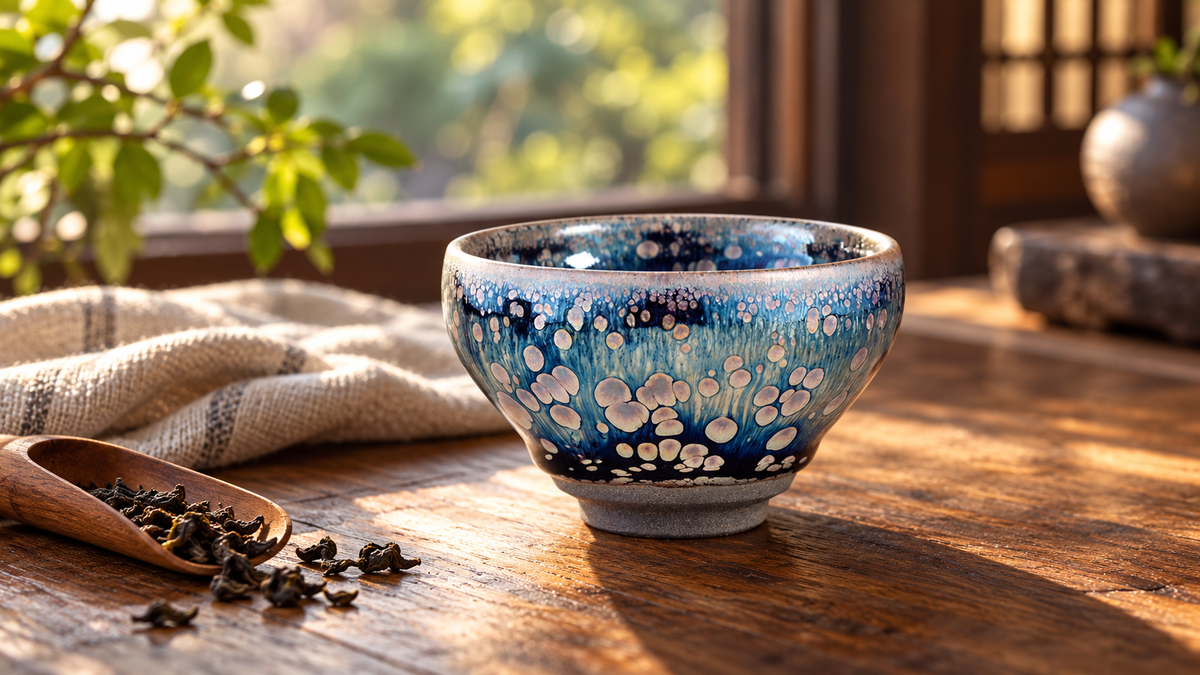
The lifestyle header illustrates a tea-table setting using the Galaxy Moonshadow cup as its visual reference. For the actual shape, glaze appearance, and purchase details, use the original product photographs and current specifications. A staged or generated scene should never be the only evidence you use to judge a rim.
Check the rim when the cup arrives
Before using a new cup, inspect the lip and interior for damage. Run the visual check around the entire circumference rather than judging only the front. Do not use a cup with a chipped drinking edge. Wash it according to its care details, then try a modest amount of cool water to judge the sipping angle without handling hot tea.
Notice whether you naturally tilt the vessel farther than expected or reposition your fingers to reach the final sip. These observations are personal; they are more useful than a blanket promise that one rim suits every drinker. Keep the comparison to an amount you would actually serve, not a cup filled right to the edge.
For cleaning, check whether your sponge can comfortably reach the interior wall beneath any inward curve. Use gentle handling around the lip and avoid knocking it against the tap or another cup. The current records for both featured cups mark microwave use and direct stove heat as unsuitable; their shapes do not change those restrictions.
Common questions about Jianzhan cup shapes
Is a rounded cup always an inward-rim cup?
No. “Rounded” describes the body, while “inward” describes what happens near the opening. A rounded body can finish with a relatively straight edge, a subtle inward curve, or an outward lip. Check the last section of the profile separately.
Does a flared rim mean a larger capacity?
No. A flared lip describes direction, not volume. A shallow flared cup can hold less than a deeper rounded one. Use the listed capacity and leave serving headroom; do not calculate capacity from one photograph.
Can glaze names identify the cup shape?
No. Names describing spots, streaks, flowers, or colors concern the surface appearance, not a fixed silhouette. Compare the actual item even when its glaze name resembles another cup you already own.
Which shape should I choose first?
Start with a cup whose serving size and proportions resemble something you already enjoy using. Then choose the opening and profile you prefer. The 110 ml Galaxy Moonshadow and 100 ml Glacial Blossom offer two specific silhouettes to compare. For more options, browse the Jianzhan and Tenmoku tea cups and apply the same side-view check to each one.
Share:
Is Tenmoku Glaze Microwave Safe? What to Check Before Reheating
Tea Cup vs Mug: Which Fits the Way You Drink Tea?