

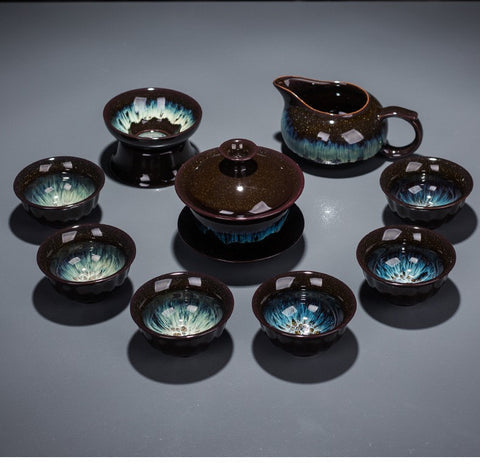
Your choice of teaware impacts tea aroma. Tea's aroma is central to the drinking experience. A good cup captures and keeps these lovely scents. Many people ask, why porcelain teacups preserve tea aroma better? The answer lies in their unique properties. Porcelain's physical and chemical nature makes it ideal for tea. Choosing the right teacup helps you fully enjoy complex aromas. It elevates your entire tea ritual.
The Non-Porous Surface of Porcelain Teacups
The surface of a porcelain teacup is incredibly smooth. It has almost no pores. This non-porous surface is a key factor. It prevents aromatic molecules from being absorbed. The tea's fragrance stays entirely in the liquid. It is not lost to the cup’s walls. Other materials, like unglazed clay, are porous. They absorb tea oils and aromas. This can change the tea's taste over time. But a porcelain teacup keeps the tea's original character.
Chemical Neutrality of Porcelain Teacups
Porcelain is a chemically neutral material. It does not react with the tea. This is very important. It ensures the tea's aroma remains pure. It will not add any foreign smells. You can use the same cup for different teas. The flavors will not mix. This makes a porcelain teacup a versatile piece of teaware. It perfectly showcases the unique scent of each tea. This quality makes porcelain a trusted choice for tea lovers.
The Shape Design of Porcelain Teacups
The shape of your teacup also affects aroma. A good cup can gather the scent. A wide cup lets the aroma escape quickly. A straight-sided cup will keep the aroma concentrated. It directs the scent right to your nose. The aroma fills the air as you lift the cup. This greatly enhances your tea session. So, the right shape is a major part of the experience.
Choosing the Right Porcelain Teacups
Choosing a porcelain teacup requires careful thought. First, check the quality of the material. A good porcelain surface is smooth. It has no flaws. It will perfectly hold the tea’s scent. Then, think about the shape. Choose one that fits your preference. A thin-walled porcelain cup is a great choice. It lets the tea cool to a good temperature.
Porcelain's Suitability for Various Teas
Porcelain teacups are suitable for every type of tea. They perfectly show the freshness of green tea. They capture the malty notes of black tea. They do not change the delicate floral scent of white tea. The complex aromas of oolong tea are also perfectly displayed. Porcelain will not react with any of these teas. It lets their aromas be released purely. This makes porcelain an ideal tool for tasting different teas.
A Comparison with Other Teaware
When you compare porcelain to other materials, its benefits are clear. Glass is neutral, but it loses heat quickly. This causes the aroma to fade. Clay is rustic, but it absorbs tea scents. This changes the tea's original taste. Stainless steel or plastic adds foreign smells. This ruins the tea aroma. Thus, the porcelain teacup performs best. Its smooth surface is a key factor.
How Teacup Temperature Affects Aroma
The teacup’s temperature is very important for aroma. Porcelain has great heat retention. It keeps the tea at a good temperature. Tea that is too hot can burn your palate. Cold tea loses its aroma. Porcelain lets the tea cool down slowly. It gives the aroma time to develop. A stable temperature lets you fully enjoy every moment.
Why Experts Prefer Porcelain Teacups
Tea experts prefer porcelain teacups for a reason. They need a neutral vessel. They need something that perfectly shows the tea's aroma. Porcelain meets all these needs. Its non-porous surface ensures a pure taste every time. Its chemical neutrality keeps the aroma clean. Its heat retention is another big plus. Experts trust porcelain. They use it to judge the quality of a tea.
Daily Use and Cleaning
A porcelain teacup is easy to clean. The smooth surface does not stain. You only need to rinse it with water. It will look clean again. This makes daily use very easy. But you must be careful. Porcelain is fragile. It can break or chip easily. So, handle it with care. Proper care will make your cup last for many years.
Teacup Shapes and Aroma Release
The shape of a teacup is a crucial part of the aroma experience.
-
Straight-rim cup: This cup has a smaller opening. It concentrates the tea's aroma at the rim.
-
Flared-rim cup: This cup has a wider opening. It lets the aroma spread out fully.
-
Tapered cup: This cup holds the aroma. It is good for strong-scented teas.
Considering these shapes is an important part of tea enjoyment. A straight-rim cup is good for teas with complex scents. It helps you catch every detail. A flared-rim cup is great for lighter teas. It lets the aroma release more naturally. Choosing the right shape makes your tea experience richer.
| Material | Aroma Retention | Pros | Cons |
|---|---|---|---|
| Porcelain | Excellent | Chemically neutral, non-porous, easy to clean | Fragile |
| Glass | Good | High clarity, non-absorbent | Poor heat retention |
| Unglazed Clay | Poor | Earthy feel, absorbs flavor | Changes original tea taste |
| Stainless Steel | Poor | Durable, but can give off a metallic taste | Destroys tea aroma |
This table clearly shows the aroma retention of different teacups. It helps you make a wise choice. Unglazed clay has a unique style. But it absorbs aroma, which is bad for a pure tea taste. A stainless steel cup can give a metallic taste. It will ruin the tea's aroma. Therefore, the porcelain teacup has clear advantages. It gives you the best tea drinking experience.
Conclusion
In summary, the porcelain teacup is the best choice for preserving tea aroma. Its non-porous surface is the main reason. It stops the aroma from being absorbed by the cup. Its chemical neutrality ensures the aroma stays pure. Its heat retention is also helpful for aroma. Choosing the right porcelain teacup will make your tea experience perfect.
Frequently Asked Questions
1. How does the surface of a porcelain teacup help to preserve the tea's aroma?
A porcelain teacup preserves aroma due to its unique surface. When porcelain is fired at high temperatures, it forms a smooth, dense glaze. This glaze is completely non-porous. It has no tiny holes or cracks. This means that when tea is poured into the cup, its aromatic molecules cannot get into the cup's walls. They are all kept at the top of the tea. This allows the tea's aroma to be released constantly. Other materials, like unglazed clay, have micro-pores. These pores act like sponges. They absorb the tea's oils and aromas. Over time, these pores build up flavor. This can change the tea's taste. The smooth glaze on porcelain is key to preserving the aroma. It ensures that every sip has the pure, true scent of the tea.
2. How does a porcelain cup's heat retention affect the tea's aroma?
A porcelain cup's good heat retention is a big help for the tea's aroma. Aroma is made of volatile compounds. They need a certain temperature to be released. If the tea cools down too fast, the aroma will fade. You will not get to smell the tea fully. Porcelain holds its temperature well. It keeps the tea at a good warmth for a long time. This lets the aromatic molecules keep being released. It gives you more time to enjoy the tea's smell. Also, porcelain does not get too hot to hold. You can hold the cup comfortably. This lets you enjoy both the warmth and the aroma of your tea. A stable temperature is very important for a good tea experience.
3. Why is porcelain a better material than others for tasting different tea aromas?
Porcelain is the best material for tasting a variety of tea aromas. This is because it is chemically neutral. Porcelain is made from kaolin clay. It is fired at a very high heat. This process makes it a very stable material. It will not react with anything in the tea. This means it will not add any strange smells or tastes to your tea. You can use the same porcelain cup for different teas. You will not get a mix of flavors. This neutrality is a core part of tea tasting. It allows you to tell the small differences in aroma between teas. Other materials, like clay or stainless steel, can change the flavor.
Share:
What's the best teacup material for drinking green tea?
What Is the Ideal Size for a Teacup? Perfect Capacity Guide for Tea Lovers