


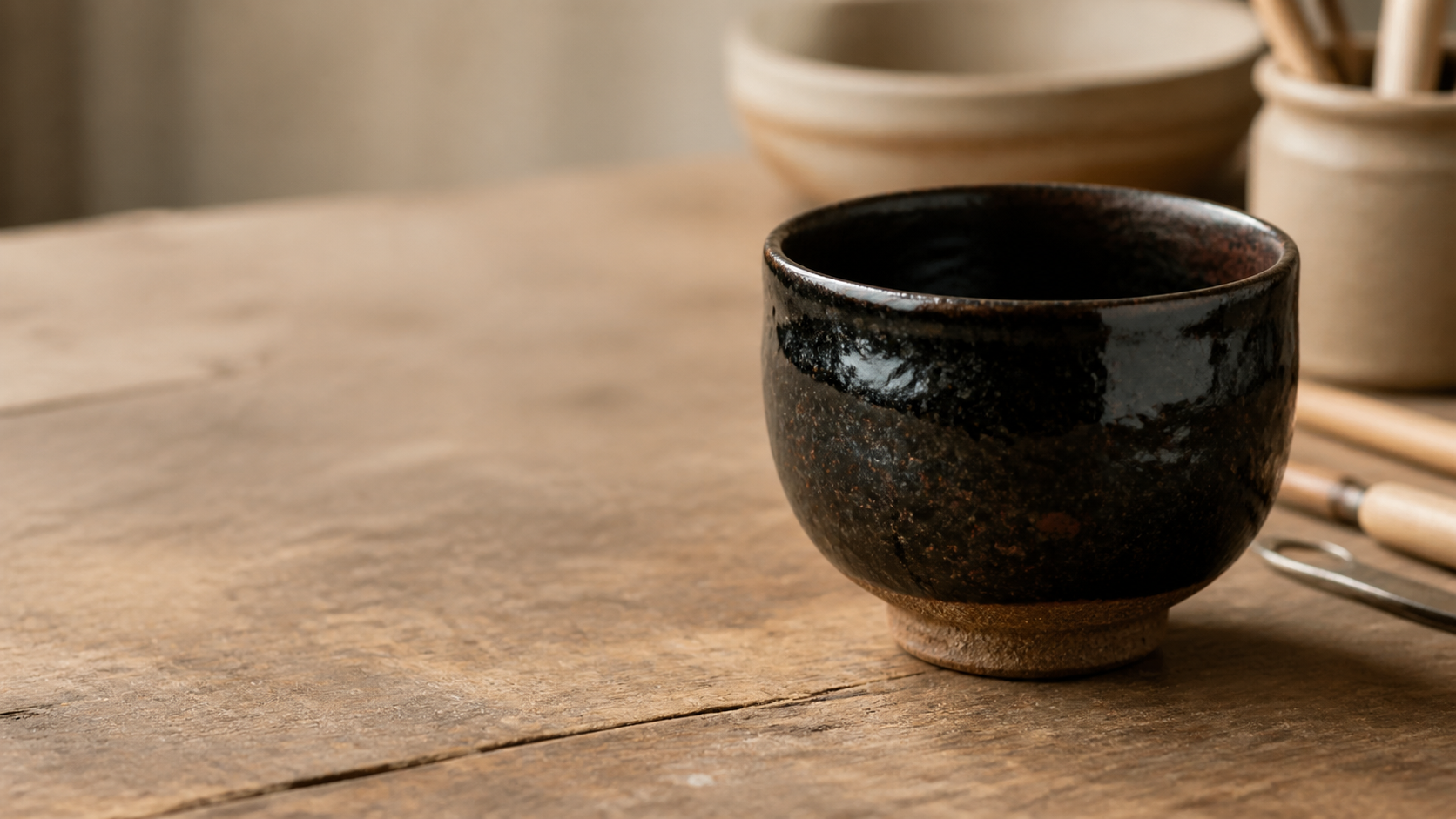
Handmade pottery brings clay, craft, and kiln-fired character into everyday tea. Learn how handmade ceramic cups are made, what to look for when choosing one, and how to care for it.
What is handmade pottery?
Handmade pottery is ceramic ware shaped, finished, and fired through a maker’s hands rather than produced entirely by an automated process. A potter may throw clay on a wheel, build a form by hand, trim the foot, apply glaze, and make firing decisions that affect the final surface. Each stage leaves a quiet record in the finished cup, bowl, or teapot.
Why handmade pieces look different
No two handmade pieces are exactly alike. A slight variation in curve, glaze flow, color, or foot is a natural result of clay, heat, and touch. These details are not automatically defects. They are often what make a handmade tea cup feel alive: the rim may be subtly softer, the glaze may reveal depth under light, and the cup may settle into the hand differently from a factory-made object.
How a tea cup is made
The process begins with clay chosen for its texture, strength, and firing behavior. The potter forms the vessel, lets it dry to the right stage, refines the profile, then fires it once before glazing. Glaze is applied by dipping, pouring, brushing, or spraying. A final kiln firing transforms the clay and glaze. Temperature, atmosphere, placement in the kiln, and cooling all influence the result, especially in reactive dark glazes.
What to look for when buying
Start with function. Check capacity, base stability, rim comfort, and whether the form suits the way you drink tea. Then look closely at the surface. A glaze should feel intentional, with no sharp edges or cracks that compromise normal use. Read the product information for care and material details. A handmade cup can be a daily object, a gift, or a collectible; the right one is the piece whose use and character match your expectations.
Handmade pottery in daily tea
A handmade cup does not need to wait for a special occasion. Using one regularly makes small differences easier to appreciate: how it holds warmth, how the rim feels, and how its surface changes in morning or evening light. For a first piece, choose a versatile tea cup. For a more ceremonial experience, add a smaller tasting cup or a tea set that makes sharing easy. Build slowly, based on the rituals you genuinely keep.
Care for handmade ceramic ware
Treat handmade pottery with steady, gentle care. Rinse after tea, wash with a soft sponge when needed, and dry fully before putting it away. Avoid thermal shock by not pouring boiling water into a very cold cup. Use product-specific guidance for dishwashers and microwaves. With these habits, a well-made ceramic piece can become more familiar and rewarding over time.
| Feature | Why it matters | What to check | Daily-use tip |
|---|---|---|---|
| Clay body | Supports form and firing | Stable base and comfortable weight | Warm gradually before use |
| Rim | Shapes the sipping experience | Smooth, comfortable edge | Choose the thickness you prefer |
| Glaze | Creates color and surface character | Intentional finish and safe care guidance | Use a soft sponge |
| Variation | Shows handmade process | Subtle differences in form or pattern | Enjoy it as part of the piece |
How to begin
- Start with one small, repeatable practice.
- Choose tools that feel comfortable and easy to care for.
- Pour slowly, notice aroma and temperature, and adjust the routine to your own tea.
- Keep the focus on attention rather than perfection.
From clay to cup: the handmade process
A handmade cup begins long before the glaze appears. The potter prepares clay so it is even and workable, then chooses a forming method that suits the intended shape. Wheel throwing creates a round vessel from centered clay, while hand-building can create softer or more sculptural forms. In either case, the maker considers wall thickness, balance, and the relationship between rim and base. A good tea cup should feel deliberate in the hand, not merely attractive from a distance.
After forming, clay must dry slowly enough to avoid stress. At the leather-hard stage, a potter may trim the foot, refine the curve, or add a maker’s mark. The fully dry piece receives a first firing, then glaze is dipped, poured, brushed, or sprayed onto the surface. A final kiln firing transforms clay and glaze together. Heat, firing atmosphere, placement in the kiln, and cooling influence the finished surface, which is why handmade work carries visible character.
Why kiln variation matters
Two handmade cups from one series can look related without being identical. Glaze may pool more deeply at the base, break more lightly at a rim, or reveal different depth in daylight than in a kitchen. In reactive glazes such as Jianzhan and Tenmoku, firing and cooling can make these changes especially visible. Variation is part of the appeal when it does not interfere with stable, comfortable daily use.
Look at a handmade piece from several angles. Notice where the glaze meets the foot, whether the base sits securely, and how the rim meets the lips. A small irregularity may simply record the handmade process. What matters most is that the cup is sound, pleasant to hold, and finished for the use described in its product information. Repeated use in your own light is often the best way to understand its character.
How to choose a handmade tea cup
Start with the tea you drink and the moment you want the cup to serve. A small handleless cup works well for repeated infusions; a more generous bowl can suit a slow morning tea. Consider capacity, weight, and the rim opening. A wide opening lets aroma rise and can help tea cool sooner. A narrower form may concentrate fragrance and retain warmth a little longer. Comfort should lead the choice, because there is no perfect profile for every person.
Then consider color and surface. Pale interiors make liquor color easy to read, while dark glazes give tea dramatic contrast. Texture can be visually engaging but should not make a cup awkward to clean. Check product care notes before assuming dishwasher or microwave compatibility, and choose a listing that clearly describes the object. Clear information is especially helpful when choosing a gift for someone whose tea habits you do not know closely.
Handmade pottery and factory-made ware
Factory-made cups can be consistent, accessible, and perfectly useful. Handmade pottery offers something different: a maker’s decisions appear in the profile, surface, and subtle variations from one piece to another. It is not necessary to treat one as superior in every setting. Choose handmade ware when you value individual character and tactile experience; choose any cup that supports how you truly drink tea.
Learn to distinguish character from damage. Gentle asymmetry, glaze variation, and signs of hand-finishing can be normal. Sharp edges, instability, or cracks that affect use are different concerns. Product photographs, descriptions, and care guidance help set expectations. When uncertain, choose a stable form, a comfortable rim, and a size you will reach for often.
Care, storage, and gifting
Let a handmade cup reach room temperature before adding very hot water, especially in a cold kitchen. Rinse after tea, use a soft sponge when needed, and dry the foot and rim before storage. Avoid abrasive pads and follow the item’s own care instructions. Build a collection gradually: one versatile cup first, then another for a guest. For a gift, select a usable size, stable shape, and finish that fits the recipient’s home; pairing it with loose-leaf tea makes the gesture feel complete.
A final note on daily use
The most satisfying tea practice is the one you can repeat. Keep the tools clean, set them where they are easy to reach, and make each session small enough to fit a real day. As you use the same cup and tea over time, you will notice details that no checklist can supply: how the warmth settles in the hand, how a glaze changes with light, and how a few quiet minutes can reset the pace of an afternoon.
Frequently asked questions
Do I need special equipment?
No. Begin with tea, hot water, and a cup you enjoy. A teapot, gaiwan, tray, or matching set can be added when they make the ritual more useful.
What makes a good everyday choice?
Choose a piece that is comfortable to hold, straightforward to clean, and suited to the tea you actually drink. A meaningful routine grows through use.
Explore ARTTEACUP
Discover Tea Cups, Jian Zhan, and Gift Boxes for handmade tea ware.
Share:
What Is a Tea Cup?
How To Choose Jian Zhan: A Consumer Guide