

A tea tasting at home can be as small as two teas, two cups, and a few quiet minutes. You do not need a formal ceremony, a large collection, or specialist vocabulary. The useful part is tasting with a clear question: which tea would you choose again, what changes as it cools, or which of two similar teas suits your afternoon?
Start with cups you already own. If you are buying a set, choose it around the number of people and samples rather than the size of a display. Small serving cups can keep each pour manageable, while a consistent shape makes the comparison easier to follow. A decorative cup can be enjoyable to drink from without being a neutral vessel for judging tea color.
Start with two teas and one question
A tea flight is a small selection served for comparison. For a first session, two teas are enough. Choose two unflavored black teas, two oolongs with different roast levels, or a familiar tea alongside one you have not tried. A narrow pairing makes it easier to describe a difference than a crowded table of unrelated samples.
Decide whether you want a relaxed preference tasting or a more controlled comparison. For a preference tasting, prepare each tea according to its package recommendations, then compare the results you would actually drink. For a controlled comparison of similar teas, keep the leaf-to-water ratio, water source, brewing vessel, temperature, and steeping time consistent where appropriate. Write down the method you chose.
Do not force every tea through the same boiling-water recipe. Different teas can call for different brewing conditions. If you change both the tea and the method, your result compares the complete cups you prepared, not the leaves in isolation. That is still useful for choosing a daily drink; it simply answers a different question.
Gather the essentials before heating water
- Two labeled tea samples, with their packaging or brewing recommendations nearby.
- A separate brewing vessel for each sample, or one vessel that can be rinsed thoroughly between rounds.
- One drinking cup per person per sample for a side-by-side tasting.
- A scale or consistent measuring method, a timer, and a way to measure brewing water.
- Plain drinking water, a waste bowl, a cloth, and a notebook.
- Small labels placed beside the cups, outside the pouring area.
A serving cup and a brewing vessel do different jobs. Brew separately and strain or decant the tea before serving, so loose leaves do not continue steeping in the tasting cups. Keep hot equipment on a stable, heat-resistant surface with enough space to pour without reaching across another person.
You can use a familiar teapot or infuser; a gaiwan is not a requirement. Avoid buying extra accessories before you know what your routine needs. The first useful purchase may be a second matching cup rather than an elaborate tray. Also check what a listing actually includes: a cup set does not automatically come with tea, a brewer, or a kettle.
How many tea tasting cups do you need?
For simultaneous comparison, multiply the number of people by the number of teas. Two people tasting two teas need four drinking cups. Give each person their own cups rather than passing cups around. With fewer cups, taste in rounds and rinse between samples, accepting that your memory will play a larger part in the comparison.
The amounts below are optional serving examples, not brewing ratios or professional testing standards. Measure the water used for brewing separately. Leave comfortable space below each cup's rim, and pour less if the cup is small, difficult to hold, or too hot to handle comfortably.
| People | Tea samples | Drinking cups | Example pour per cup | Practical arrangement |
|---|---|---|---|---|
| 1 | 2 | 2 | 30–50 ml | Label A and B; compare without refilling immediately. |
| 2 | 2 | 4 | 30–50 ml | Each person receives an A cup and a B cup. |
| 2 | 3 | 6 | 30–40 ml | Allow more table space and use clear sample labels. |
| 4 | 2, in separate rounds | 4 | 30–50 ml | Rinse between rounds; this is not a simultaneous comparison. |
For example, two people receiving 40 ml of tea A each need at least 80 ml of brewed tea A available for serving, plus any allowance for liquid left in the brewer or pitcher. Repeat that calculation for tea B. The amount of water you initially add may be greater because leaves and equipment retain some liquid.
Choose cups for the comparison you want to make
If your priority is reducing differences between vessels, use cups with the same shape, material, thickness, and interior finish. Fill them to the same measured amount and serve them under similar conditions. A tall mug beside a shallow cup introduces another variable, even when both contain the same tea.
For comparing the appearance of tea liquor, plain white interiors provide a more neutral background than colored glazes. Clear glass offers visibility but also reflects the surroundings. Use consistent lighting and do not treat a darker-looking pour in a dark cup as evidence that the tea itself is stronger.
Jianzhan cups can be part of a relaxed home tasting because you enjoy their shape and glaze. They are not automatically professional evaluation cups, and their decorative interiors can make color comparisons less reliable. Keep the focus on personal drinking preferences, or use separate plain cups when comparing liquor color matters.
Comfort also counts. Check the rim, the space available for your fingers, and how securely the cup sits on the table. A listed capacity is not a target fill line. You should be able to lift and set down the cup without gripping near hot liquid or spilling over the edge.
A four-cup setup with the Four Seasons set
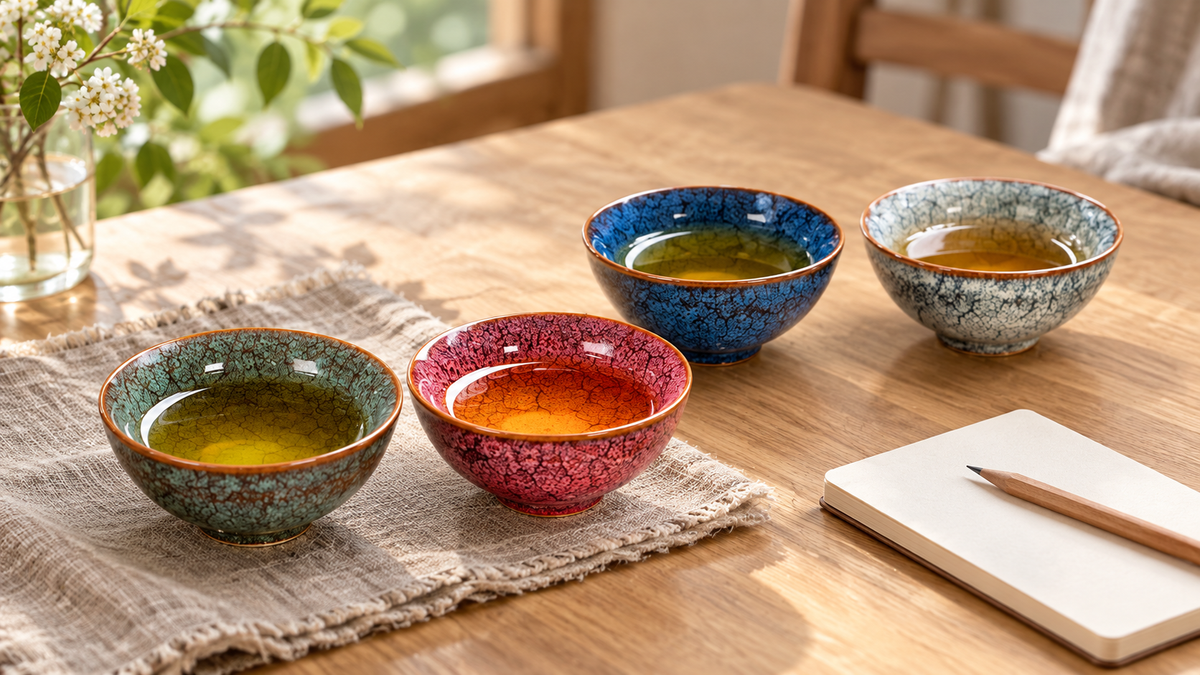
The JianZhan Tenmoku Four Seasons Tea Set contains four cups. Each is listed at 110 ml, with a height of 4.2 cm and a width of 9 cm. That makes the set a practical example for two people tasting two teas side by side, with smaller pours rather than full cups.

Place one A label and one B label in front of each person. Assign the tea by label, not by cup color: otherwise it is easy to confuse a blue cup with sample B after rearranging the table. Keep a note of which cup holds each tea.
The four glazes differ, so this arrangement is for casual tasting and sharing, not a neutral visual test. If you want to reduce the influence of appearance, repeat the pairing another day with the teas assigned to different cups, or use matching plain cups instead. Do not assume a favorite cup proves that its glaze improves the tea.
This recommendation is for the four cups, not a complete brewing kit. Bring your own tea and brewing equipment. If you usually drink alone, two suitable cups you already own may be enough; buying a four-cup set makes more sense when you will also use it with another person or for serving guests.
Run a short tasting without rushing the pours
- Label first. Mark the teas A and B and put the matching labels beside the empty cups. Record the tea names separately if you prefer to taste without looking at them.
- Measure and brew. Follow the approach you selected, recording leaf amount, water amount, temperature, and time. Separate the liquid from the leaves when the steep is finished.
- Serve equal small pours. Divide each tea between the intended cups. If you brew sequentially, note the serving times; do not pretend a freshly poured tea and one that has cooled for several minutes are at the same temperature.
- Wait until comfortable. Smell without placing your face close to hot steam, then sip only when the liquid is cool enough for you. There is no benefit in rushing a hot cup.
- Compare and return. Taste A, then B, have a little plain water if wanted, and revisit both as they cool. Write your own notes before discussing them.
Keep strongly scented candles, perfume, and cooking aromas away from the table. Save richly flavored snacks until after the first comparison. If you do serve food, note it rather than treating the tasting as a perfectly controlled test. The aim is a useful personal result, not a performance.
Write notes you will actually use again
Four short lines per tea are enough: aroma, first sip, texture, and finish. Familiar descriptions such as toasted, floral, grassy, drying, smooth, or lingering are more useful than elaborate phrases you would never use in conversation. It is also fine to write “pleasant, but not something I want every day.”
Separate observation from preference. “Feels more drying than A” describes a comparison; “I prefer A with breakfast” records your choice. Neither requires a numerical score. Add the brewing details so you can repeat a good cup instead of remembering only the package name.
When another person tastes something different, record both impressions. You do not need to agree on a winner. If the result surprises you, repeat the pairing on a different day before making a large purchase. A single session is a snapshot shaped by preparation, serving conditions, and personal preference.
Common mistakes to avoid
- Changing everything at once: compare similar teas or clearly record the different brewing methods.
- Using cup color as evidence: switch to plain interiors when judging the tea's appearance.
- Pouring to the rim: choose a small, comfortable serving with room to lift the cup safely.
- Leaving leaves in the cup: decant before tasting so brewing does not continue unnoticed.
- Relying on memory alone: label the samples and write a few words before the cups are cleared.
- Buying too much equipment: add cups only when your usual number of tasters and samples requires them.
After the session, empty the cups and clean them according to the product's care recommendations. Remove any remaining tea, rinse away detergent thoroughly, and let the cups dry before storing. Check that they have no lingering scent before the next tasting. Do not assume dishwasher or microwave compatibility from the word ceramic alone.
Questions before your first tea flight
Can I use tea bags?
Yes. Two bagged teas can make a useful preference comparison. Record the bag count, water volume, and steeping time. Bag sizes and leaf quantities can differ, so one bag from each brand does not necessarily create an equal leaf-to-water ratio.
Do the cups have to match?
Matching cups are preferable when you want fewer vessel differences. Mixed cups are still usable for a relaxed session, provided you do not attribute every difference to the tea. Use the same measured pour and be explicit about the limits of the comparison.
Should I buy special tasting cups immediately?
No. Start with two suitable cups, a clear pairing, and repeatable preparation. After several sessions, you will have a better basis for choosing extra cups. A set should support the way you actually share and drink tea, not make a simple home tasting feel complicated.
Share:
Tea Cup vs Mug: Which Fits the Way You Drink Tea?