

A tea cup can be a thoughtful present when you visit a friend, thank a host, or celebrate a shared interest in Chinese tea. The part that often feels uncertain is not the shopping itself. It is what happens next: how to offer the gift, what to say, whether to suggest using it immediately, and how to avoid making your host feel obliged to arrange a tea session.
For an informal visit, keep the gesture personal and uncomplicated. Choose something that fits the recipient, present it with a short explanation, and let them decide when to open or use it. Chinese tea gift etiquette is not a single performance that every household follows. Family habits, the occasion, and the relationship between giver and recipient matter more than an elaborate script.
This article focuses on the social side of giving tea cups. For a fuller comparison of vessel types and product details, see our separate article on choosing Chinese tea gifts.
Tea hospitality starts with the people at the table
Tea in China belongs to a broad range of everyday and social practices, rather than one uniform ceremony. UNESCO's account of traditional tea processing and associated social practices includes drinking and sharing tea alongside the work of producing it. That social setting is useful context for a gift: the object supports a relationship, but it does not dictate how the recipient should drink.
A friend might enjoy a carefully arranged tea table, while another makes tea between work calls. Neither needs you to stage an unfamiliar ritual on their behalf. Before choosing a present, think about your actual conversations with that person. Have they mentioned hosting friends, admiring a particular colour, or wishing for cups that fit a small table? One specific observation gives the gift a clearer purpose than a broad claim about what every tea enthusiast ought to own.
The suggestions below are practical options for ordinary social visits. Weddings, formal ceremonies, and workplace gift exchanges can involve different expectations. For those occasions, ask someone involved in the event rather than assuming everyday tea-table advice applies.
Decide whether the gift is personal or meant for sharing
A single cup says, in effect, “I thought of your own tea time.” A group of cups can say, “I thought of the people you enjoy having over.” Either can be appropriate. The decision depends on the recipient's routine, not on making the package look as large as possible. A coordinated group also needs cupboard space and enough room on the table when it is in use.
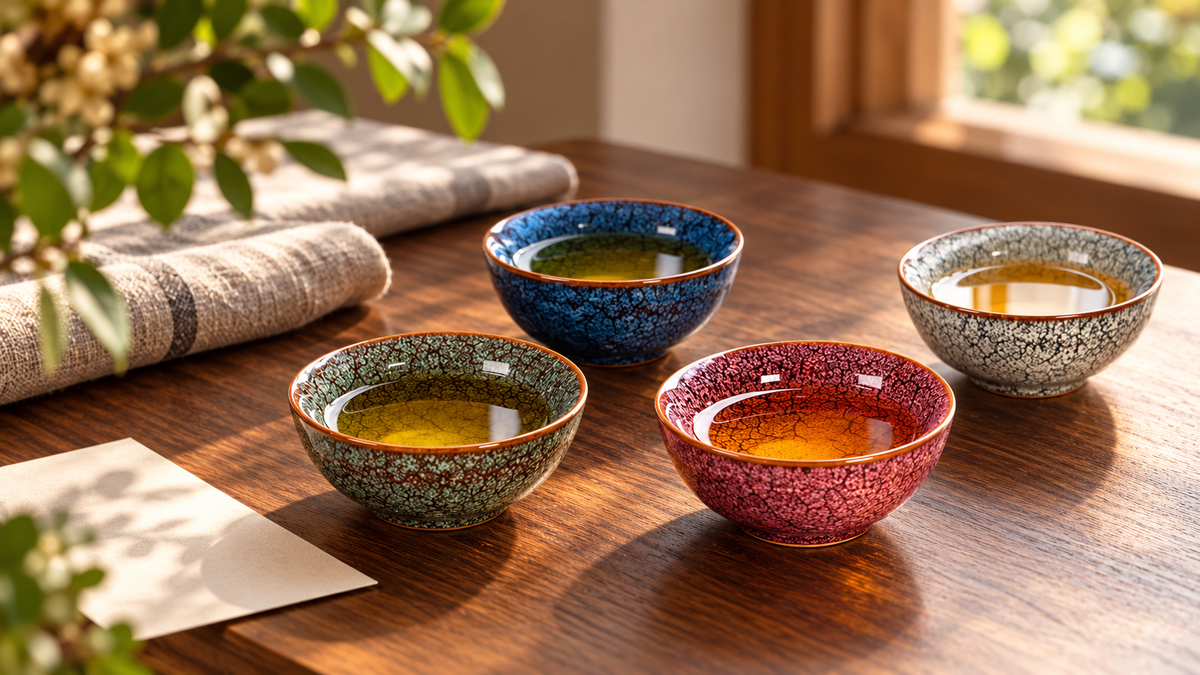
For someone who already owns a brewing vessel and regularly serves friends, the JianZhan Tenmoku Four Seasons Tea Set is a concrete example of a cup-focused present. The current listing specifies four tea cups, each with a capacity of 110 ml, a height of 4.2 cm, and a width of 9 cm. These are individual cup measurements, not the capacity of a brewing pot. The four-cup arrangement can suit someone who wants several drinking vessels without replacing their existing teapot.

Do not assume that a recipient wants a particular quantity because of their background. If number symbolism or packaging traditions matter to their family, ask someone who knows their preferences before choosing a set. The practical question is whether these particular cups suit this particular person. A different quantity or an individual cup may be a better match.
Match the gesture to the occasion
| Occasion | A considerate approach | What to avoid |
|---|---|---|
| An informal visit to a friend's home | Offer the wrapped cup after greetings, when your host has a free moment. | Expecting them to stop preparing food and open it immediately. |
| A thank-you after a tea gathering | Mention something specific you appreciated about the time together. | Presenting the new cups as an improvement on their existing teaware. |
| A birthday or housewarming | Choose for their taste and available space, with a personal note. | Buying a large setup that creates storage or maintenance work. |
| A formal family occasion | Check the family's expectations with the organiser first. | Applying casual visiting habits to a structured ceremony. |
The table is a starting point for making the visit comfortable, not a ranking of which occasions deserve expensive gifts. A modest present can carry a clear personal connection. An expensive one can create awkwardness if it seems out of proportion to the relationship or arrives with expectations about how it must be used.
How to hand over a tea gift without making it awkward
Choose a moment when the recipient is not carrying a hot kettle, answering the door to other guests, or balancing dishes. Keep the package upright and support its base. Offering and receiving things with both hands is a commonly described courtesy in Chinese etiquette, including in China Highlights' notes on visiting and gift-giving. With ceramics, it also helps you pass the package securely.
You do not need to turn that gesture into a test. If your host has a hand occupied or asks you to set the package on a side table, do that. Practical comfort takes priority over making the moment look formal. Avoid passing loose cups across a crowded table, especially when other guests are pouring hot water.
Say why you chose the gift in one or two sentences. “These colours reminded me of your dining room” is more personal than a long account of ceramic terminology. “I thought you might enjoy these when friends visit” explains the intended use without making a demand. Then allow the conversation to move on. The recipient should not need to produce an elaborate reaction to reassure you that the purchase was worthwhile.
What to write on the gift note
A useful note connects the cup to the person or a shared moment. Keep product specifications on a separate slip or product link so the personal message does not read like a catalogue. If you are sending the gift directly, include your name clearly. A beautiful parcel without an identifiable sender can create unnecessary confusion.
- For a host: “Thank you for such a lovely afternoon. I thought these cups might suit another tea session with friends.”
- For a close friend: “The blue glaze reminded me of the cups you pointed out last time we met. I hope this adds something nice to your tea breaks.”
- For a new home: “A small addition to your new table, whenever you have time for a cup of tea.”
- For someone you rarely see: “Something for your tea shelf until we can share a pot again.”
Use a message that is true to your relationship. Do not invent a memory just because it sounds warm. Equally, avoid assigning a symbolic meaning to a glaze unless you have a reliable basis for that statement and know it matters to the recipient. Liking the colour is already a perfectly adequate reason for choosing it.
Let the recipient decide when to open and use it
A host may open a gift immediately, set it aside until the guests have left, or wait for another quiet moment. Let them choose. Asking several times whether they will open it can turn a friendly gesture into an obligation. If the parcel needs careful handling, a simple “There are ceramic cups inside” provides the useful information without directing the rest of the visit.
There is also no need to insist on drinking from the new cups straight away. Your host may have already selected a matching service, prepared a particular number of places, or arranged a small table with no spare room. Newly unpacked teaware also needs to be checked and cleaned appropriately before use. The gift can become part of a later session without diminishing the occasion on which it was given.
If they do invite you to try the cups, ask where they would like you to put them and whether they need help. Do not rearrange their brewing area or open tea containers without asking. A gift adds an option to someone's home; it does not give the giver responsibility for redesigning the tea table.
When the gift becomes part of a shared tea session
Once seated, follow the host's pace. Wait until a cup is placed securely before lifting it, and leave room around pouring vessels. If the cup is hotter than expected, set it down and allow it to cool rather than trying to maintain a pose. A comfortable grip and an unhurried sip matter more than copying a movement you have seen online.
For a set with several colours, let guests choose if the host offers that choice. Do not assume that particular colours belong to people of a certain age or gender. With the Four Seasons cups, the different finishes can simply make it easier for people to remember which cup is theirs. That is a practical use of visual variety, without attaching a cultural rule to the palette.
If you are hosting, leave space below each rim and adjust the serving amount to what people can comfortably lift. The listing's 110 ml figure describes the cup's stated capacity, not a requirement to pour that much tea every time. Ask whether people would like another serving. A guest who pauses or declines may simply have had enough, and should not need to justify it.
Conversation about the gift can stay equally relaxed. Talk about the shape, the colour in the room's light, or what attracted you to the set. Avoid announcing that everyone must prefer the tea from the new cup. Different people notice different things, and a friendly gathering does not need unanimous opinions about teaware.
Pack the useful details separately from the presentation
Before giving the present, make a small reference card with the product name, the number of cups, and a link to the listing. For the Four Seasons set, the confirmed contents are four cups. Do not describe it as a complete brewing kit or promise a teapot, tray, tea leaves, or accessories based on a styled photograph. If particular gift packaging is important, confirm the current packaging before ordering.
Keep care information specific to the actual item. If an appliance-use claim is not stated clearly, do not add a handwritten “dishwasher safe” or “microwave safe” label of your own. A product link lets the recipient check current care details or contact the shop with a question. That is more useful than a generic care card copied from unrelated ceramics.
For a date-sensitive present, check delivery estimates for the destination and allow a buffer. Do not turn an estimated arrival into a promise to the recipient. If timing is uncertain, a note about a forthcoming gift can be less stressful than placing pressure on the host to organise a celebration around a parcel.
Common questions about giving tea cups
Is one cup an acceptable gift?
Yes, it can be appropriate for someone who enjoys a personal drinking vessel and already has equipment for brewing. Describe it as something chosen for them, rather than apologising for its size. For someone who hosts groups, several cups may be more practical, but the recipient's preferences should decide.
Should I include tea with the cups?
Only if you know the recipient would welcome it. Cups and tea do not need to come together. If you add tea, keep it sealed in its labelled packaging and choose with the person's preferences in mind. Do not assume every tea drinker wants the same flavour or drinks tea at every time of day.
Do I need special wrapping colours or a traditional speech?
For an ordinary visit, a personal message and secure presentation are sensible starting points. If your recipient's family has preferences about colours, numbers, or ceremonial gifts, check with someone close to them. Avoid treating an internet checklist as a rule that applies to every Chinese household.
What if the recipient already owns many cups?
Ask about a favourite shape or something they currently use before purchasing. A dedicated collector may have quite specific preferences. If you are unsure, sharing a product photo privately and asking whether it appeals to them can preserve the thoughtfulness of the gift while reducing the risk of an unwanted addition.
A thoughtful gift leaves room for the recipient
The best finishing touch is permission to enjoy the gift in their own way. They might use one cup every morning, reserve the set for friends, or keep a favourite colour on a shelf until the weekend. None of those choices requires correction from the giver.
Choose a piece that fits the person, offer it warmly, and keep the practical details clear. If a four-cup arrangement suits their home, compare the actual photos and measurements of the Four Seasons tea cups. The lasting value of the gesture comes from the attention behind it and the moments the recipient chooses to make with it.
Share:
Handmade Ceramic Tea Cups: Choosing Size, Rim, and Grip