

Choosing a tea bowl is easier when you begin with the way you actually drink tea. A bowl for whisking matcha needs working room for a bamboo whisk. A bowl-shaped cup for loose-leaf tea may be chosen for comfortable sipping, an easy grip, and a size that suits the number of pours you make. A beautiful glaze matters, but shape, capacity, rim, base, and care requirements determine whether you will enjoy using the piece every day. This guide gives you a practical checklist before you buy.
Start with the drink, not the name on the product page
“Tea bowl” is a broad English label. A Japanese chawan is commonly used to prepare and drink matcha in the same vessel. Ippodo Tea advises selecting one with enough space to whisk without spilling, while still being comfortable to lift and drink from. A Jian Zhan or Tenmoku-style bowl-shaped cup, by contrast, can be a satisfying vessel for drinking brewed tea even if its dimensions are not ideal for a full-size matcha whisk. The Metropolitan Museum of Art describes tea bowls as both practical utensils and aesthetic objects in Japanese tea practice. Those cultural associations are worth appreciating, but they do not turn every bowl-shaped cup into interchangeable matcha equipment.
Decide which of these routines sounds like yours:
- Whisk and drink matcha: prioritize a broad, accessible interior, a stable foot, and enough headroom above the liquid for the whisk to move.
- Drink loose-leaf tea from a bowl: prioritize a comfortable rim, sensible serving capacity, and a shape that feels secure between your hands.
- Serve several short infusions: consider a smaller cup or bowl-shaped teacup so each pour stays manageable rather than cooling in an oversized vessel.
- Give a gift: first check the recipient’s tea habit, then confirm the listing’s measurements, included items, care notes, and packaging.
Do not assume a product is suited to whisking matcha simply because its title includes “tea bowl.” If the listing lacks an interior photo or dimensions, ask for them before ordering. A beautiful bowl that cannot accommodate your whisk is still beautiful, but it is not the right tool for that task.
Five measurements and details that matter
A useful listing should let you understand more than the outside appearance. Check capacity, diameter, depth, base, and rim. Capacity tells you how much liquid the vessel can hold, not necessarily how much you should pour for comfortable handling. A large nominal capacity can be useful for whisking or a generous serving; it can be inconvenient if your usual tea session consists of small, repeated pours. Diameter and depth work together: two bowls with the same capacity can feel very different when one is wide and shallow and the other is tall and narrow.
The base should sit flat and feel stable on a tray. The rim should look and feel finished, with no sharp or rough spot where you sip. Look closely at the inside: a smooth working surface is easier to clean, while a heavily textured interior can trap residue and complicate whisking. Finally, compare the actual dimensions with a cup you already enjoy using. A ruler and an existing favorite are more reliable than a product photo shown without scale.
| What to check | Why it matters | Question to ask |
|---|---|---|
| Capacity | Sets the upper limit, not the ideal fill level. | How much tea do I normally serve at once? |
| Opening and interior | Affects access for a whisk and ease of cleaning. | Will my whisk fit and move freely? |
| Depth and wall shape | Changes headroom, grip, and the feel of a pour. | Can I lift it comfortably when filled? |
| Rim and foot | Influence sipping comfort and stability. | Does the rim look smooth and the base sit level? |
| Material and care | Determine how you clean and use the piece safely. | Is it intended for food use, and what does this listing say about care? |
Matcha bowl or bowl-shaped teacup?
For matcha, the practical test is whether the interior gives your whisk room to move. A generous mouth and a stable base help you work without knocking the whisk against the wall or sloshing tea over the edge. A bowl that feels impressive in photographs may be too narrow at the bottom or too full at your normal water level. If you plan to make matcha lattes, you may also prefer a bowl with an intentional pouring lip; Ippodo distinguishes that use from drinking a single serving directly from a chawan.
For brewed tea, you may not need whisking room at all. A smaller Jian Zhan-inspired vessel can bring the glaze close to your eye, feel secure in both hands, and fit a short-pour routine. Some shoppers like a broader opening so they can see the tea and the changing reflections in the glaze; others prefer a deeper profile that feels sheltered in the palm. Neither silhouette is universally better. Pick the one that makes sense for the drink and serving volume you repeat most often.
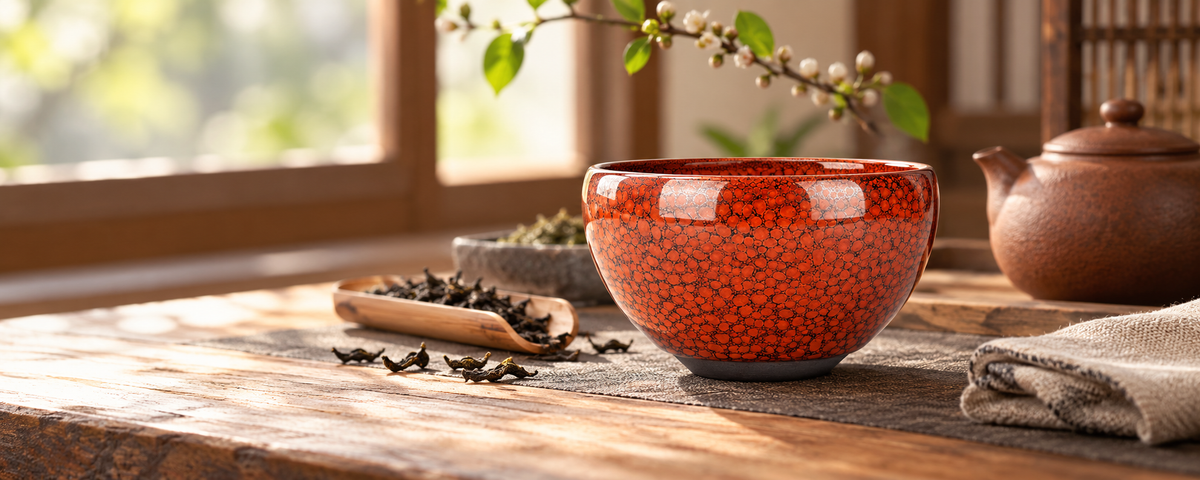
ARTTEACUP’s Orange Flow Tenmoku Ceramic Teacup Bowl is an example of a bowl-shaped teacup. Its listing states a 140 ml capacity, a 9.5 cm diameter, and a 6 cm depth. Those figures make it easier to compare with a cup you already own. They do not, by themselves, guarantee that a particular whisk will fit; for matcha, assess the interior shape and your whisk size as well.

Choose a shape you will enjoy holding
Look at the profile from the side, then imagine lifting it when it contains hot tea. An outward-flared or “bamboo hat” shape shows more of the tea surface and glaze, but the wider edge may ask for a different grip from a round, deeper bowl. A round bowl-shaped cup often rests naturally between two hands. A straighter-sided form can feel more compact on a crowded tray. These are handling preferences, not a hierarchy of quality.
The wall thickness and weight also change the experience. Heavier bowls can feel grounded but tiring if you hold them for a long session. Thin rims can feel delicate against the lip, while a thicker rim may feel more substantial. Because listing photographs cannot communicate weight perfectly, look for a stated weight when available, and read the return policy if hand feel is a deciding factor. If you already have a favorite cup, measure its diameter and height and use it as a personal benchmark.
As a visual contrast, see the Bamboo Hat-Shaped Oil-Spot Glaze Jianzhan Cup. Its flared profile presents the glaze differently from the rounded Orange Flow bowl. Compare their silhouettes before comparing their surface patterns; it is easier to live with a quieter glaze on a comfortable shape than a striking pattern on a vessel that does not suit your hands.

Read the glaze as appearance, not as a performance promise
Jian Zhan and Tenmoku-style pieces attract attention through their dark grounds, speckles, streaks, and changing reflections. Small differences in pattern are part of why buyers enjoy looking at individual pieces. When shopping online, inspect several product photos, including a view of the interior and base. Ask whether the photographed item represents the exact piece shipped or an example of a finish that naturally varies. If you are buying a gift, that distinction can matter more than the poetic name of a glaze.
Do not treat a glaze color as proof of a particular taste change, heat-retention result, firing history, or food-safety status. Those claims need product-specific evidence. A dark interior may make light-colored tea look different, while a vivid glaze can make the vessel itself the focus; that is a visual preference. Choose the finish you will be happy to see repeatedly, not a supposed health or flavor benefit inferred from a photograph.
For regular drinking, confirm that the piece is intended for food contact. The U.S. Food and Drug Administration warns that lead can leach from some improperly made ceramic foodware and that decorative-only pieces should not be used to serve food or drink. This is a general buying precaution, not a claim about any particular ARTTEACUP item. If a listing is unclear, ask the seller for its material and food-use information before purchase. Never use a piece labeled “Not for Food Use” as a drinking vessel.
Match the bowl to your routine: a practical buying sequence
- Write down your main use. Is it matcha whisking, brewed tea, a series of small infusions, or occasional display and gifting? Choose one primary use so the decision stays focused.
- Set a size reference. Measure a cup or bowl you use now. Note what you wish were wider, shallower, lighter, or easier to grip.
- Review the product’s actual listing. Check capacity, diameter, depth, material, food-use guidance, care, and included items. Do not transfer specifications from a similar-looking piece.
- Inspect all available photos. Look for the inside, side profile, foot, and rim. If these views are missing, request them.
- Consider cleanup and storage. A bowl you can comfortably wash, dry, and store is more likely to become part of your daily practice.
- Decide whether the price makes sense for you. Compare the complete listing, not just a hero image: shape, finish, dimensions, included accessories, and seller policies all affect value.
This sequence prevents a common mistake: falling in love with a glaze and only afterward discovering that the vessel is too small for your whisk, too large for your tea tray, or too awkward to hold when full. It also keeps the purchase personal. You do not need the “best” tea bowl for everyone; you need a bowl that fits your own way of making and drinking tea.
Care, cleaning, and what to avoid
Follow the specific product’s care instructions first. As a cautious default for handmade or decorated ceramics, avoid sudden temperature changes, abrasive pads, and stacking heavy items directly on a delicate rim. After use, empty the bowl, rinse away tea residue, clean with a soft sponge if the maker allows it, and let it dry fully before storage. This simple routine helps you see the glaze clearly and notice any change in the vessel’s condition.
Do not assume a piece is microwave-safe, dishwasher-safe, or suitable for direct heat because another tea bowl is. The Orange Flow listing, for example, separately states that it is not for microwave or stovetop use. Its dishwasher claim is specific to that listing and should not be generalized to every Jian Zhan-style item. If a listing’s care instructions conflict or appear incomplete, ask before using the bowl in an appliance. When you are in doubt about an unfamiliar glaze or a vintage piece, keep it out of food service until you have reliable product-specific information.
What makes a good tea-bowl gift?
The recipient’s routine is the best starting point. Someone who whisks matcha every morning may appreciate a roomy chawan with an easy-to-clean interior. Someone who brews loose-leaf tea in small pours may be happier with a smaller, comfortable bowl-shaped teacup. A collector may care more about a particular glaze pattern or profile. If you cannot determine the recipient’s habits, select a versatile shape, check the return policy, and avoid claiming that it is suitable for every tea method.
Look closely at what the listing says is included. A product photograph may show a tray, teapot, bamboo whisk, or cloth as styling props. They are not included unless the listing explicitly says so. Confirm whether the piece arrives in a gift box, whether a card can be added, and whether its care requirements will be easy for the recipient to follow. For more gift-oriented options, browse the store’s gift collection and check each item’s included contents rather than assuming all products in the collection are sets.
Quick answers before you buy
Can I use any tea bowl for matcha?
You can make matcha in many vessels, but a bowl intended for whisking is easier to use when the interior gives the whisk room and the base stays steady. Compare your whisk size with the bowl’s opening and interior, and leave headroom above the water. A small bowl-shaped drinking cup may be better for sipping brewed tea than for vigorous whisking.
Is a wider bowl always better?
No. A wider opening may make whisking and viewing the tea easier, but it can also change how the bowl feels in your hands and how much room it takes on a tray. Choose the width for your primary use and your grip, not for a single photograph.
Does the glaze determine whether a bowl is safe?
Appearance alone cannot establish food safety. Check the seller’s food-use statement and any available product-specific information. The FDA advises against using decorative-only pottery for food and drink. If a listing gives no clear answer, ask before buying.
How should I compare two bowls online?
Place their measurements beside each other, then compare the interior, rim, base, weight if listed, care instructions, and the exact contents of the package. Use similar photo angles if possible. If a critical detail is missing, do not guess from the product title.
Find the bowl that fits your tea
The best purchase starts with a real routine: what you prepare, how much you pour, and how you like to hold the vessel. Once the shape and size fit, let the glaze and finish make the choice feel personal. Browse ARTTEACUP’s Jian Zhan and bowl-shaped teaware, open the individual listings, and compare their stated dimensions and photos before deciding. If you are specifically shopping for a whisking bowl, confirm that its interior meets your whisking needs rather than relying on the category name.
Share:
How To Choose Jian Zhan: A Consumer Guide
How to Choose a Tea Cup: A Consumer Guide